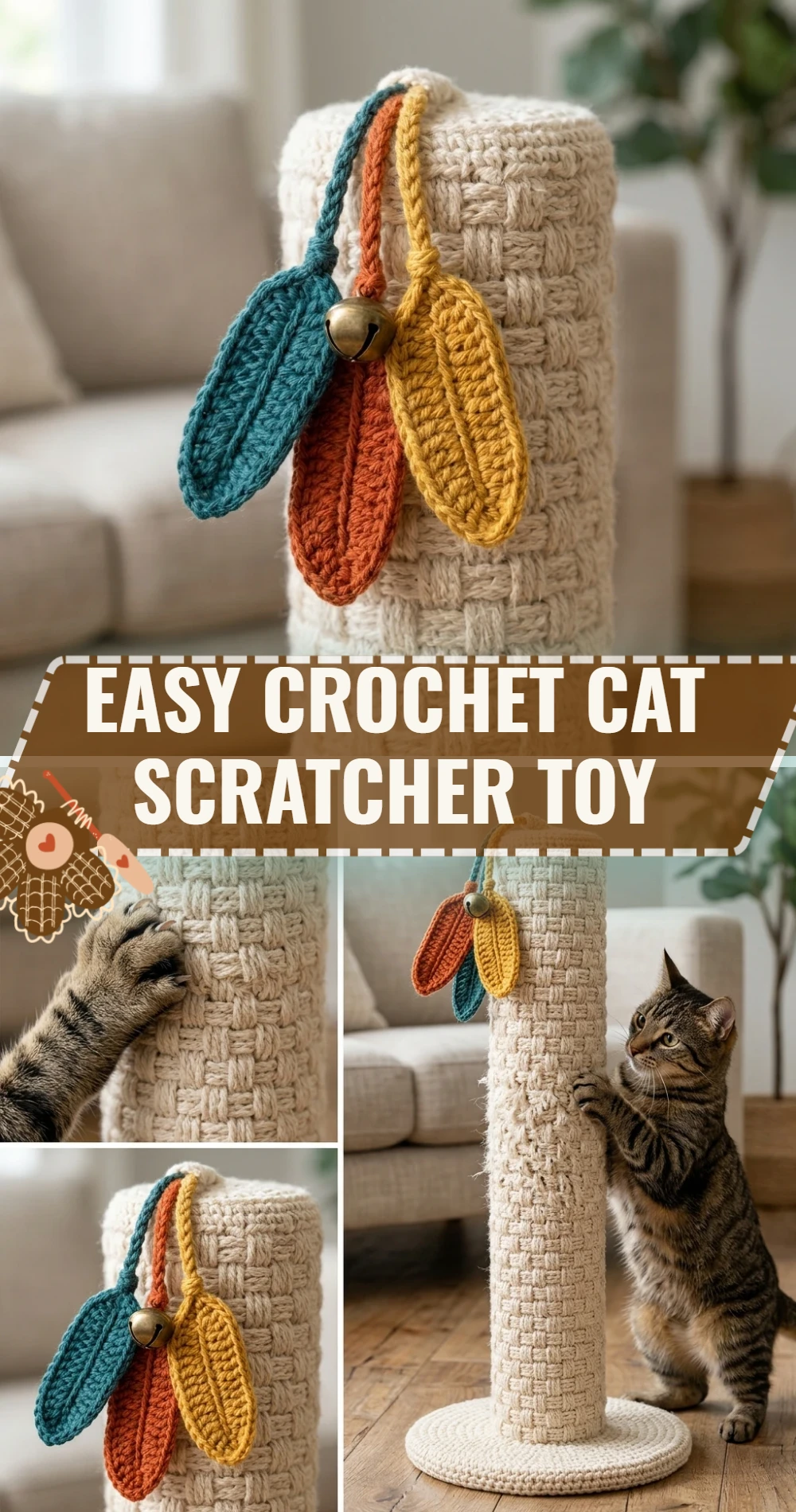
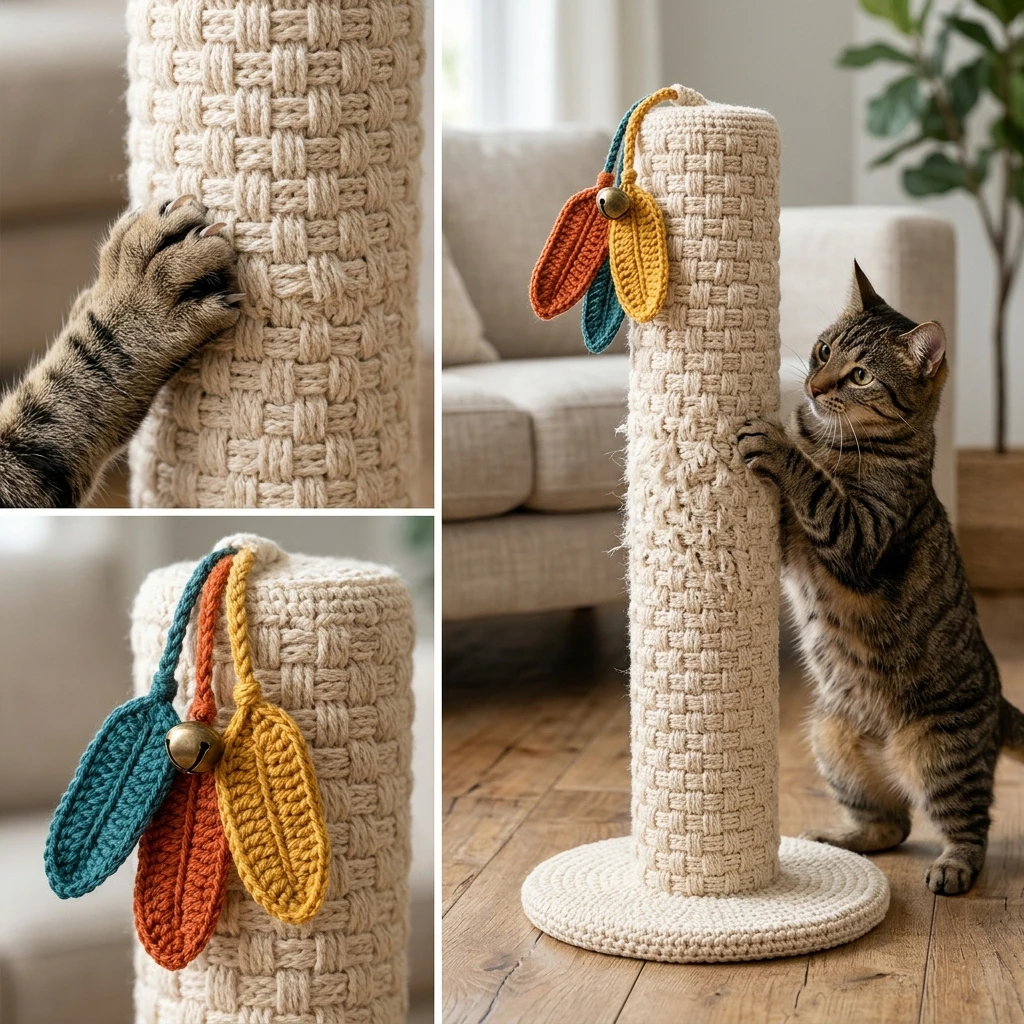
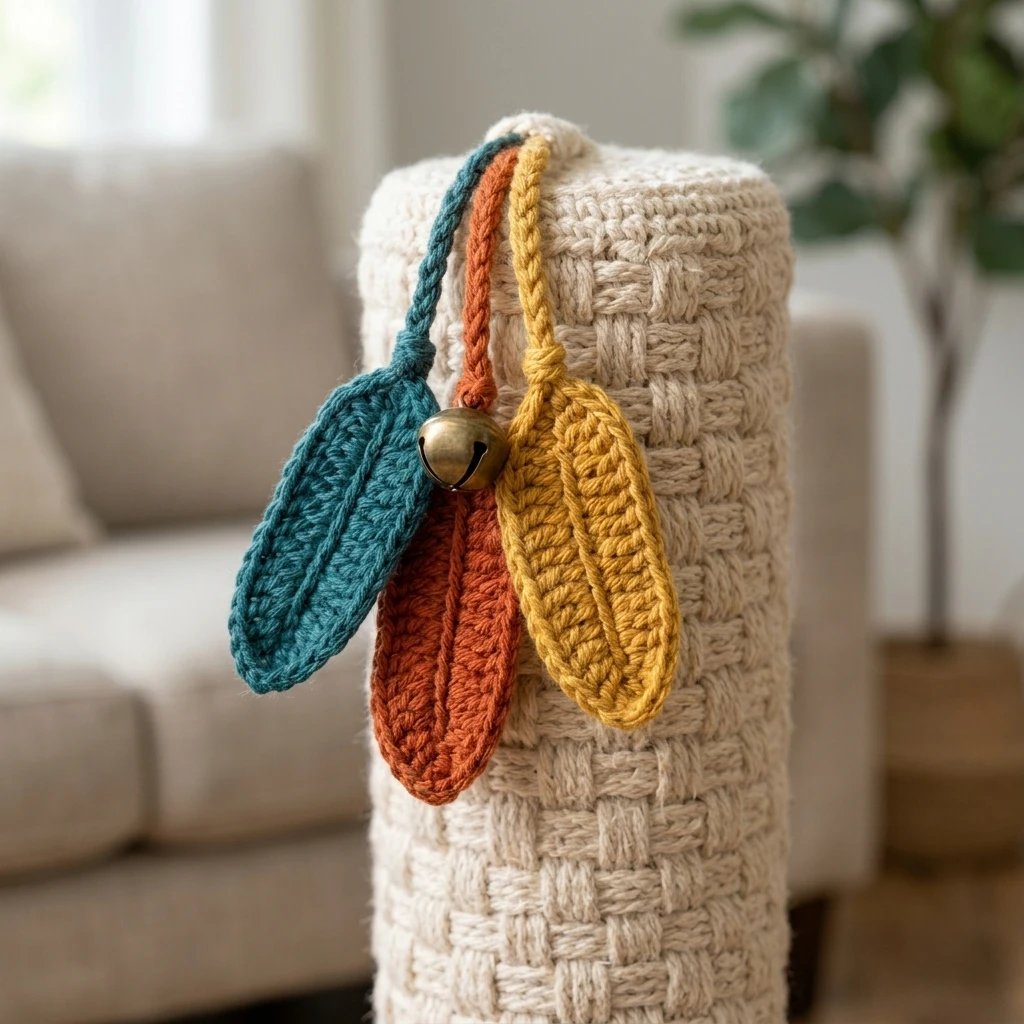
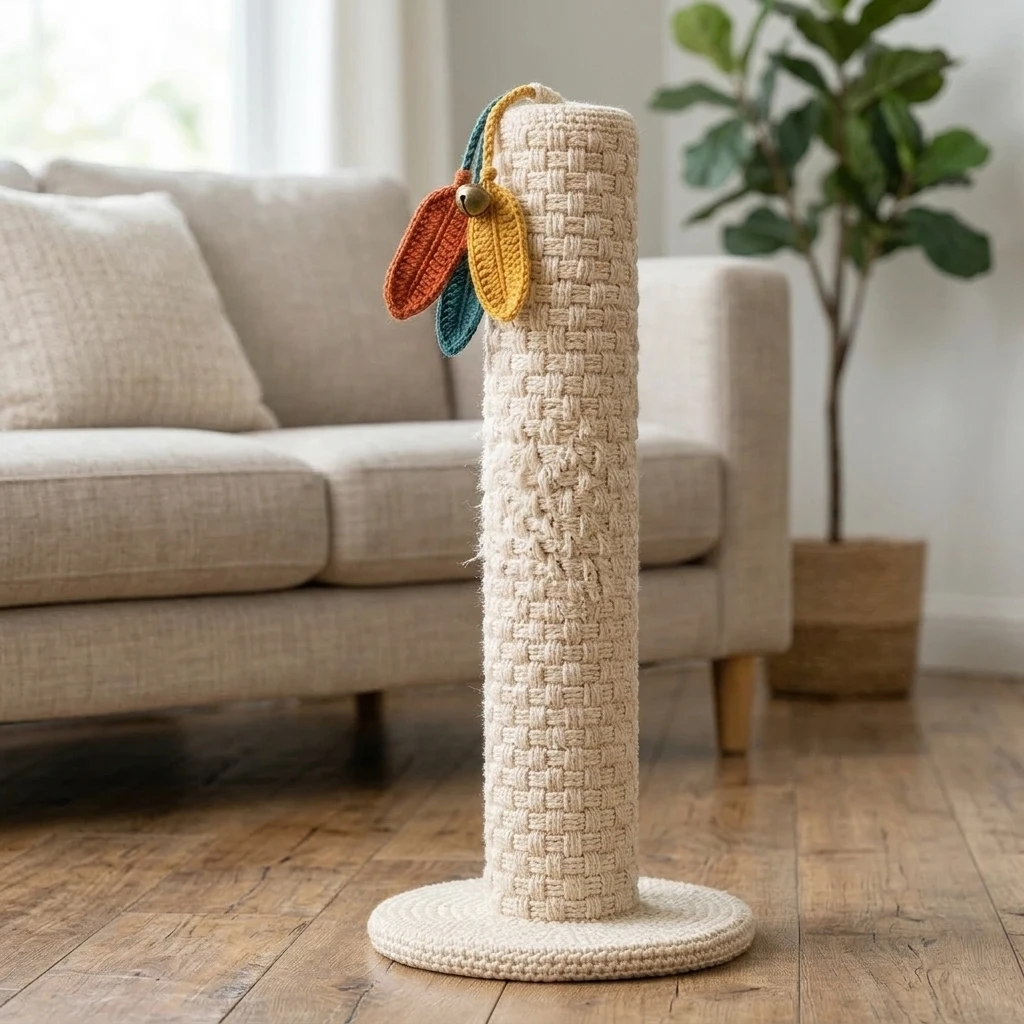
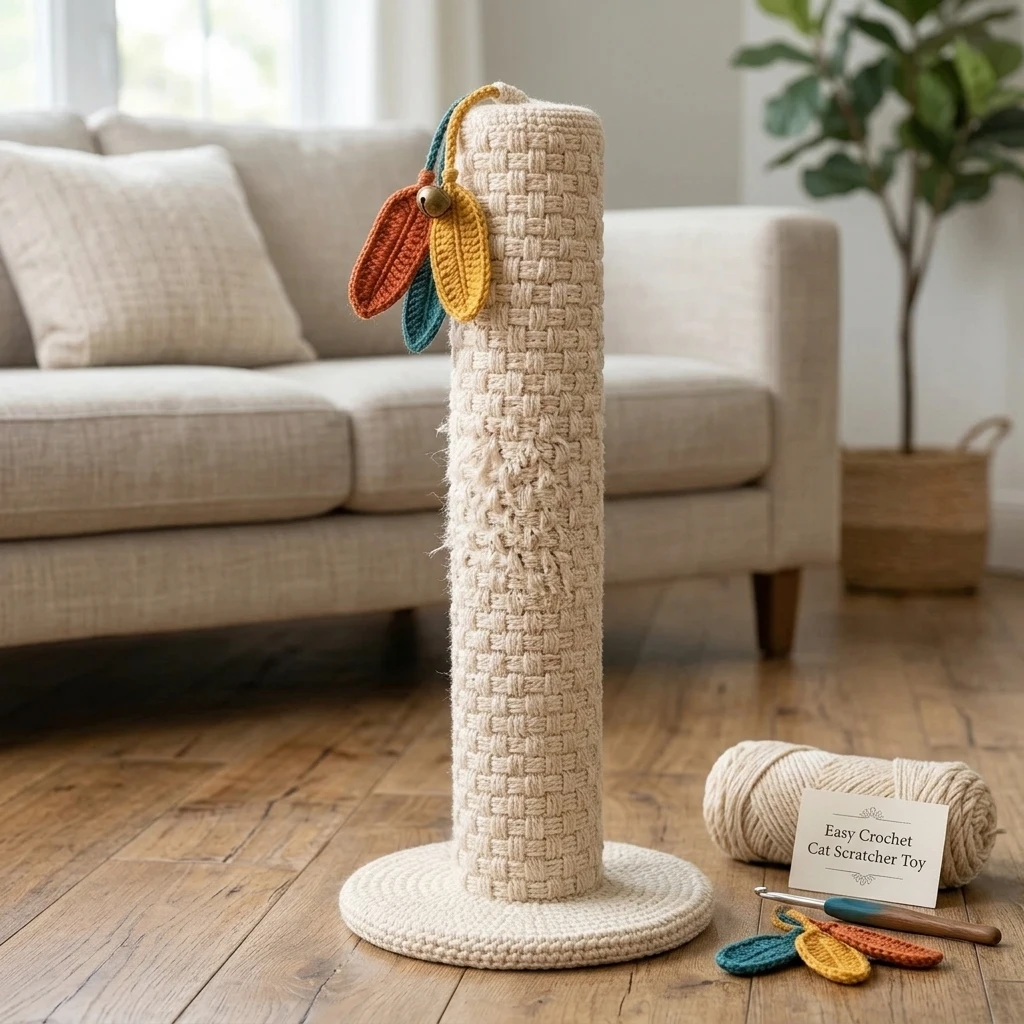
Provide your feline friend with a durable, handmade outlet for their natural instincts with this Easy Crochet Cat Scratcher Toy. Designed with a focus on rugged texture and satisfying resistance, this project transforms basic stitches into a sturdy bolster that stands up to vigorous clawing and batting. Whether you are using a thick cotton cord or a sisal-inspired yarn, the finished project offers a tactile experience that cats crave, making it the perfect quick weekend project for pet owners who want to combine craft with utility. This construction relies on a dense cylinder shape that is easy to grip and even easier to toss across the floor.
The Design: What Makes This Pattern Different
Unlike standard stuffed toys that use soft, fuzzy acrylics, this scratcher toy is designed specifically for durability. The visual identity of the piece relies on a ribbed or heavily textured surface created by working in specific loops or using high-tension single crochet. The structural integrity is reinforced by a tight gauge, ensuring the stuffing doesn’t peek through even after months of play. One common mistake to avoid is using delicate “halo” yarns or loosely spun wool; these can snag on a cat’s claws and fray instantly. Instead, this design prioritizes firm, natural fibers that provide the “crunchy” feedback cats love when they scratch.
Project Info at a Glance
| Skill Level | Beginner / Easy |
| Estimated Time | 1.5 – 2 Hours |
| Finished Size | Approximately 8 inches long, 3 inches diameter (estimated) |
| Hook Size | 5.0mm (H/8) or 5.5mm (I/9) |
| Yarn Weight | Bulky (Category 5) or Two strands of Worsted (Category 4) |
| Gauge | 14 sts x 16 rows = 4″ in Sc (photo-inspired) |
| Best For | Active cats and multi-pet households |
Materials and Tools
Yarn
For this project, you will need approximately 80-100 yards of a sturdy, non-fuzzing yarn. 100% cotton is the preferred choice for its strength and washability. You may also use hemp or jute twine for an ultra-rugged version, though these materials require a bit more hand strength to manipulate. If using standard worsted weight yarn, we recommend holding two strands together throughout the pattern to achieve the necessary density.
Tools
- Crochet hook (sized to create a very tight fabric)
- Large-eye tapestry needle
- Stitch markers
- Polyester fiberfill or cotton scraps for stuffing
- Optional: Dried catnip or a small bell for internal placement
Abbreviations
- ch: chain
- sc: single crochet
- st(s): stitch(es)
- sl st: slip stitch
- inc: increase (2 sc in one stitch)
- dec: decrease (sc 2 together)
- BLO: back loop only
- Rnd: round
Pattern — Step by Step
The Cylindrical Body
The toy is worked in a continuous spiral to avoid a visible seam where the cat might snag a claw. We begin by creating a flat circular base and then working upward to create the tube.
- Rnd 1: Start with a magic ring. Work 6 sc into the ring. (6 sts)
- Rnd 2: 2 sc in each st around. (12 sts)
- Rnd 3: *1 sc, inc* repeat around. (18 sts)
- Rnd 4: *2 sc, inc* repeat around. (24 sts)
- Rnd 5: Sc in the BLO of each st around. This creates the “corner” to transition to the body. (24 sts)
- Rnd 6-25: Sc in each st around. For extra texture, you may alternate Rnds of BLO sc and regular sc. (24 sts per rnd)
- Rnd 26: Sc in the BLO of each st around. (24 sts)
Closing the Scratcher
Once the desired length is reached, we begin the decrease rounds to mirror the base. Do not fasten off until the stuffing is fully inserted.
- Rnd 27: *2 sc, dec* repeat around. (18 sts)
- Rnd 28: *1 sc, dec* repeat around. (12 sts)
- Rnd 29: Dec around until the hole is nearly closed. (6 sts)
Assembly
The assembly of the Easy Crochet Cat Scratcher Toy happens primarily as you reach the final rounds of the crochet process. Ensuring the toy is firm is the most important part of this stage.
- Before closing Rnd 29, firmly pack the cylinder with fiberfill. It should be stiff, not squishy.
- If using catnip, place a tablespoon of dried herb into a small scrap of fabric or a tea bag before inserting it into the center of the stuffing.
- Cut the yarn leaving a 10-inch tail.
- Using a tapestry needle, weave the tail through the front loops of the remaining 6 stitches and pull tight to close the gap.
- Bury the yarn tail deep inside the toy and trim closely so there are no dangling threads for the cat to chew.
7 Technical Tips for a Better Easy Crochet Cat Scratcher Toy
- Tighten Your Tension: If you see any gaps between stitches, drop down half a hook size. A cat’s claw should not be able to penetrate the fabric into the stuffing.
- Choose Natural Fibers: Cotton or linen blends are safer than acrylic, as they don’t develop “pills” that the cat might ingest.
- Invisible Decreases: Use the invisible decrease method (working through front loops only) to keep the surface of the toy smooth and consistent.
- Double the Yarn: If your yarn feels too thin, hold two strands together. This doubles the “bite” the cat gets when scratching.
- Internal Pouch: To keep catnip from leaking through the stitches, always enclose it in a small fabric pouch or a clean nylon stocking before stuffing.
- Reinforce the Start: Make sure your magic ring is pulled extremely tight and knotted on the inside to prevent the center from opening during rough play.
- Texture Variations: Working entirely in the Back Loop Only (BLO) for the body creates ridges that cats find highly attractive for grooming and scratching.
Frequently Asked Questions
What is the best yarn for a cat scratcher?
100% Cotton or a sturdy Hemp cord is best. These fibers are natural, durable, and provide the rough texture cats prefer for shedding their claw sheaths.
Can I wash this toy?
Yes, if you use cotton yarn. However, if you included catnip, the herb will lose its potency and may stain the yarn when wet. It is best to spot clean or use a removable outer cover if frequent washing is needed.
Is this safe for kittens?
Generally yes, but ensure you do not use buttons, beads, or long tassels which can be a choking hazard. The simple cylindrical shape is safest for all ages.
How do I make the toy heavier?
You can add a small, smooth stone or a pouch of heavy plastic pellets (secured in a fabric bag) inside the stuffing to give the toy more “heft” when tossed.
What if my cat doesn’t use it?
Try rubbing fresh catnip onto the surface of the crochet fabric. The textured stitches are excellent at holding onto the scent and particles of the herb.
Conclusion
Crafting an Easy Crochet Cat Scratcher Toy is a rewarding way to use up your cotton stash while keeping your pets entertained. By focusing on dense stitches and rugged natural fibers, you create a toy that is far superior to store-bought plastic alternatives. Don’t forget to experiment with different lengths to see what your cat prefers! If you enjoyed this pattern, save it to your “Pet Projects” board on Pinterest. Does your cat prefer long bolster toys or small round balls for playtime?
Save This Crochet Pattern