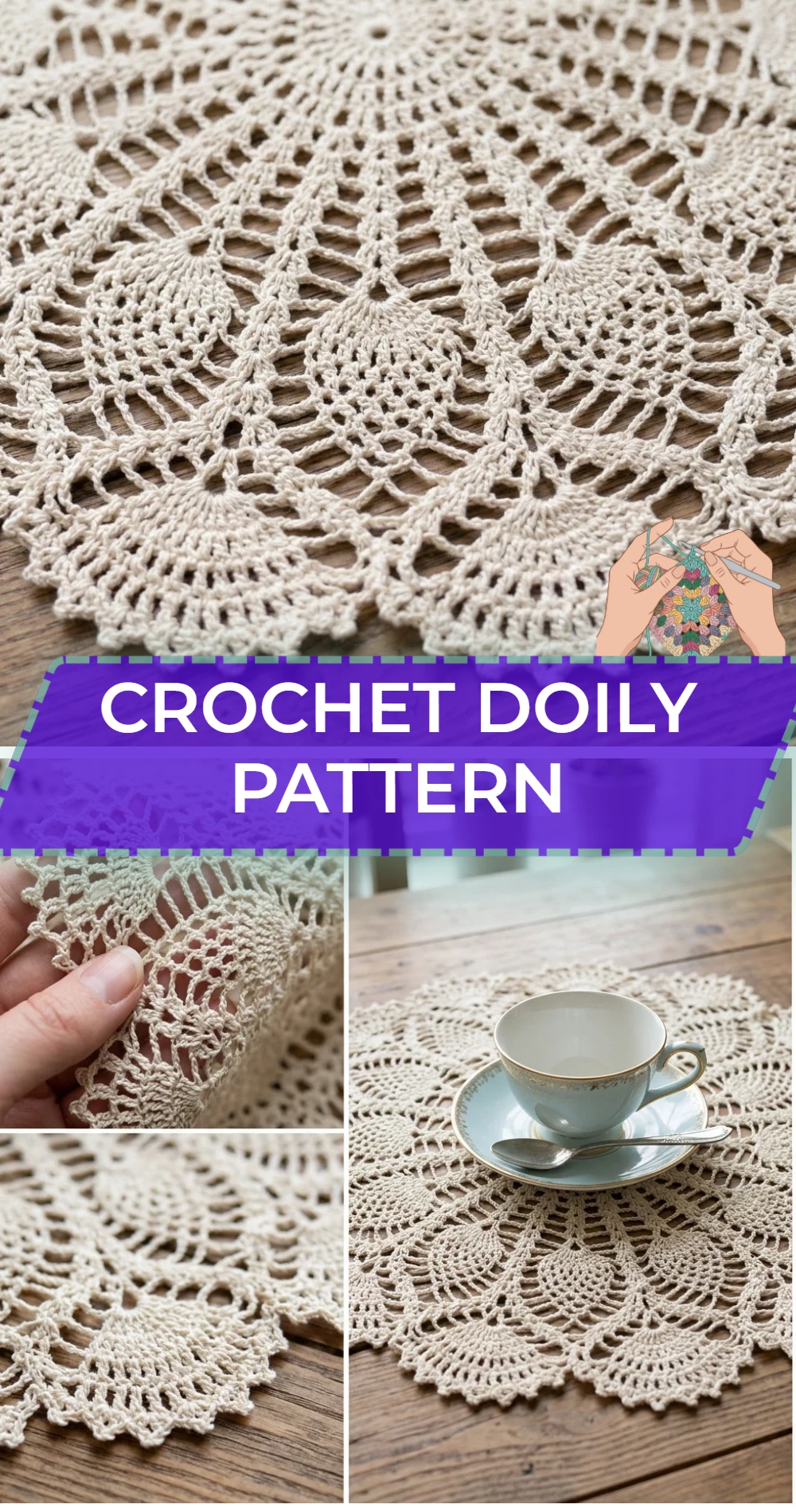
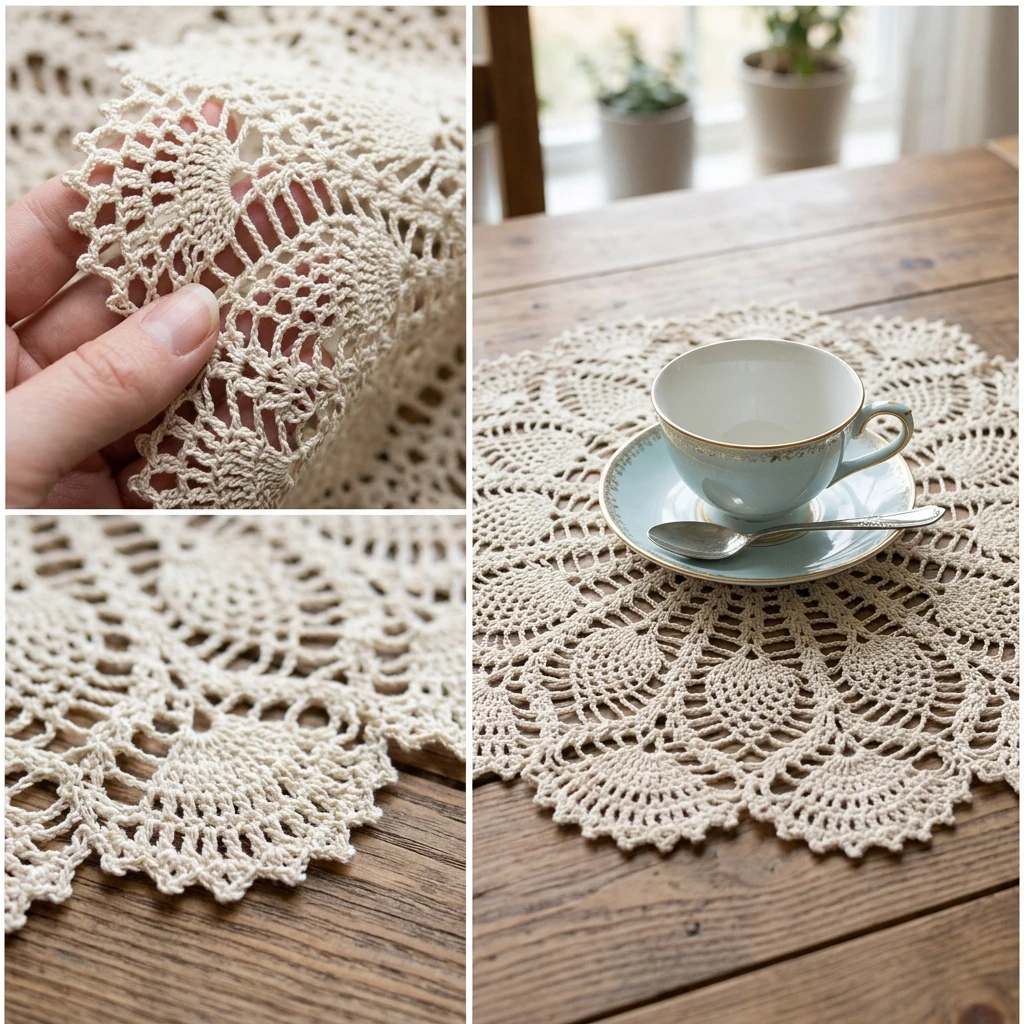
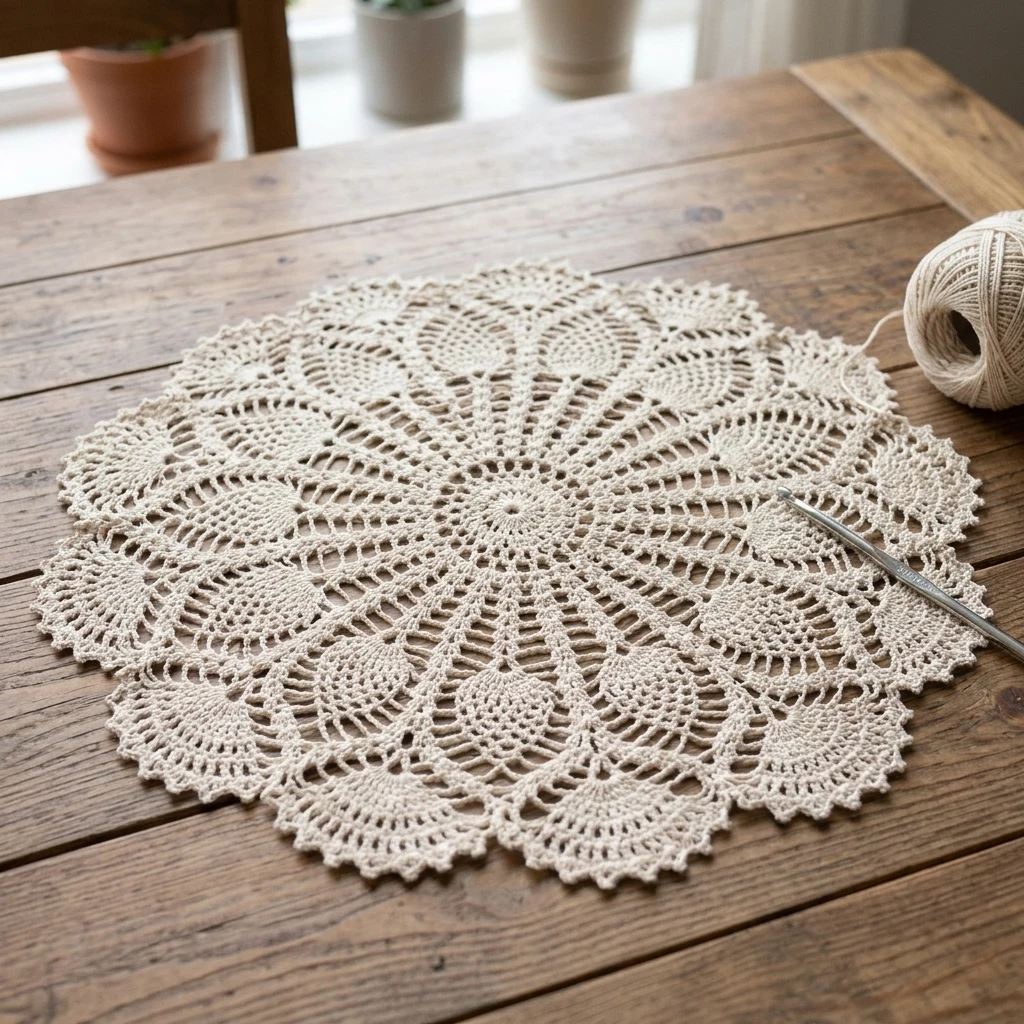
The timeless elegance of a crochet doily brings a touch of vintage sophistication to any modern home. This specific project features a classic radial design that transitions from a solid center into intricate, airy lace motifs reminiscent of blooming florals and delicate spider webs. Ideal for those looking to practice their precision with fine threads, this doily serves as a stunning centerpiece for coffee tables, a protective layer for heirloom furniture, or even a framed piece of textile art. The construction follows a traditional circular method, working from the center outward using a series of chain spaces, clusters, and picots to achieve its signature lightweight texture.
The Design: What Makes This Pattern Different
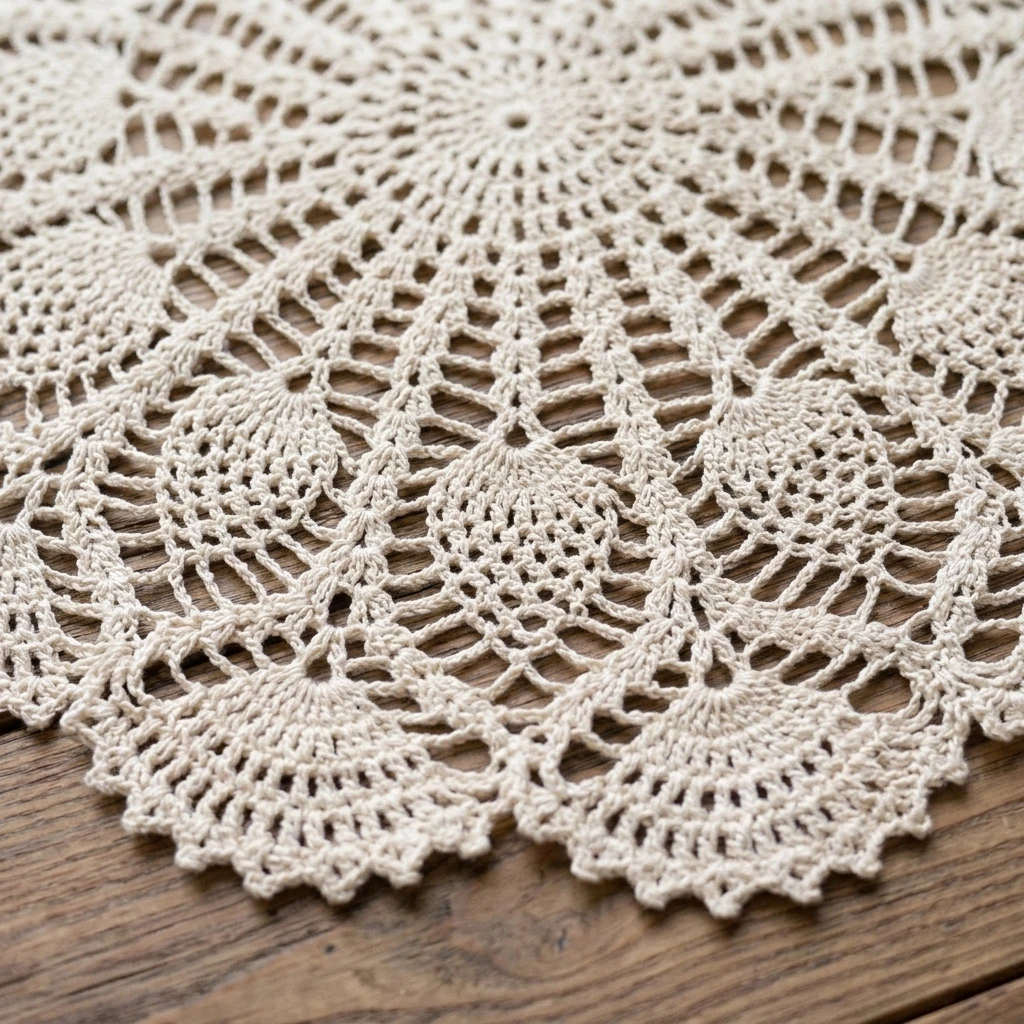
Unlike basic circular coasters, this crochet doily pattern emphasizes architectural height and negative space. The design utilizes staggered shells and elongated stitches to create a “burst” effect that draws the eye toward the scalloped edges. One of the unique structural decisions in this pattern is the use of varied chain lengths to prevent the piece from “bowling” or curling inward. A common mistake to avoid during this project is losing track of the chain-space counts in the middle rounds; if a single chain is missed, the subsequent round will not align correctly, leading to a lopsided final shape. Maintaining consistent tension is paramount, as the fine thread will highlight any irregularities in stitch height.
Project Info at a Glance
| Feature | Details (Estimated/Suggested) |
|---|---|
| Skill Level | Intermediate |
| Estimated Time | 4 to 6 hours |
| Finished Size | Approximately 10.5 inches in diameter |
| Hook Size | 1.75mm (US Steel Hook Size 4) |
| Yarn Weight | Lace Weight / Size 10 Cotton Thread |
| Gauge | First 3 rounds = 1.5 inches in diameter |
| Best For | Home Decor, Wedding Favors, Table Settings |
Materials and Tools
Yarn
To achieve the crisp definition shown in the photo-inspired project, use a high-quality mercerized cotton thread. This type of thread has been treated to increase its luster and affinity for dye, ensuring your doily has a professional, slight sheen. You will need approximately 150–200 yards of Size 10 crochet thread. While white and ecru are traditional favorites, solid jewel tones or soft pastels can modernize the look significantly.
Tools
A steel crochet hook is essential for working with lace weight thread. Ensure you have a small tapestry needle with a fine eye for weaving in ends without distorting the lace. You will also need sharp embroidery scissors and blocking supplies (stainless steel pins and a foam mat) to open up the stitches once the crochet work is complete.
Abbreviations
Pattern — Step by Step
Construction Overview
This doily is worked in continuous rounds, starting with a center ring. Each round builds upon the previous one, gradually increasing the circumference through the addition of chain loops and shell groupings. It is vital to join each round with a slip stitch as indicated to maintain the circular symmetry.
The Center and Foundation
- Round 1: Start with a magic ring or ch 6 and join with a sl st to form a ring. Ch 3 (counts as first dc), work 23 dc into the ring. Join with sl st to top of beginning ch-3. (24 dc)
- Round 2: Ch 4 (counts as dc and ch 1), *dc in next st, ch 1; repeat from * around. Join with sl st to 3rd ch of beginning ch-4. (24 dc, 24 ch-1 spaces)
- Round 3: Sl st into first ch-1 sp. Ch 3, 2 dc in same sp. *Ch 1, sk next dc, 3 dc in next ch-1 sp; repeat from * around. Join with sl st to top of ch-3.
Developing the Lace Motifs
- Round 4: Ch 1, sc in same st. *Ch 5, sk 2 dc, sc in ch-1 sp; repeat from * around. Join with sl st to first sc.
- Round 5: Sl st into first 2 chains of the ch-5 loop. Ch 3, 4 dc in same loop. *Ch 2, 5 dc in next ch-5 loop; repeat from * around. Join with sl st to top of ch-3.
- Round 6: Ch 4 (counts as tr), tr in next 4 dc. *Ch 5, tr in each of the next 5 dc; repeat from * around. Join with sl st to top of ch-4.
The Scalloped Border
- Round 7: Ch 1, sc in same st, sc in next 4 tr. *Work 7 sc in the ch-5 loop, sc in next 5 tr; repeat from * around. Join with sl st to first sc.
- Round 8: *Ch 6, sk 3 sc, sl st in next sc; repeat from * around to create the base for the final edging.
- Round 9: In each ch-6 loop, work (4 sc, picot, 4 sc). A picot is created by ch 3 and sl st into the first ch.
- Finishing: Fasten off and weave in all ends securely on the wrong side of the work.
Assembly
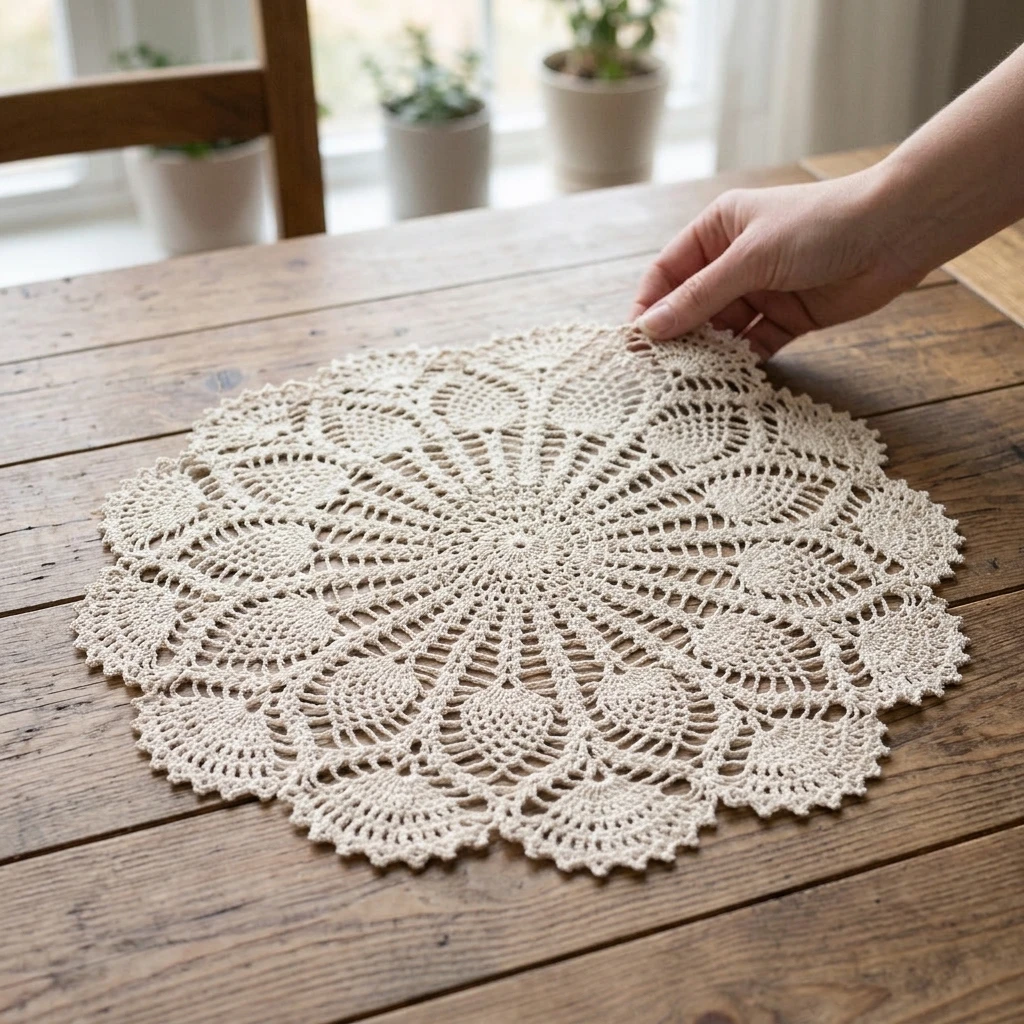
Unlike a garment, the assembly of a crochet doily focuses primarily on the blocking process rather than joining pieces. Because crochet thread can become twisted during the making, blocking is the “secret ingredient” that transforms a crumpled circle into a flat, geometric masterpiece.
- Submerge the finished doily in lukewarm water with a drop of mild soap.
- Gently squeeze out excess water using a clean towel—never wring the lace.
- Lay the doily on a foam blocking mat.
- Pin the center first, then pull the edges outward, pinning opposite sides (12 o’clock, then 6 o’clock) to ensure it stays perfectly circular.
- Use pins in every picot or scallop to accentuate the lace definition.
- Allow to air dry completely before removing the pins.
7 Technical Tips for a Better Crochet Doily Pattern
- Check Your Steel: Steel hooks use a different numbering system than standard aluminum hooks. Ensure you aren’t using a 4mm hook when the pattern calls for a Size 4 (2.0mm/1.75mm) steel hook.
- Tension is King: Lace thread has zero stretch. If you crochet too tightly, the doily will cup; too loosely, and the stitches will look muddy. Aim for a firm, rhythmic tension.
- Invisible Joins: For a professional finish, use an invisible join (needle join) on the very last round instead of a standard slip stitch.
- Manage the Twist: If your thread begins to twist and kink while working, drop your hook and let the work dangle freely for a few seconds to let the thread unwind.
- Use Rust-Proof Pins: When blocking, only use stainless steel pins. Standard pins can rust when wet, leaving permanent orange stains on your delicate white thread.
- Starch for Stability: For doilies intended for display, consider using a spray starch or a sugar-water solution during the blocking process to help the lace hold its shape.
- Count Twice, Crochet Once: Doily patterns are mathematical. If your count is off by even one stitch in the early rounds, the error will multiply as the diameter grows.
Frequently Asked Questions
Can I use regular yarn instead of thread?
Yes, you can use fingering or sport weight yarn, but the finished project will be much larger—likely the size of a placemat or small rug—and will lose the delicate “cobweb” aesthetic of traditional thread lace.
Why is my doily ruffling at the edges?
Ruffling usually means you have too many stitches for the circumference. This can happen if your gauge is too loose or if you accidentally added extra stitches in the increase rounds. Blocking can fix minor ruffling, but significant waving requires ripping back.
How do I clean an old or dirty crochet doily?
Always hand wash in cool water with a gentle detergent. Avoid bleach, which can weaken the cotton fibers over time. Lay flat to dry and re-block if necessary.
What is the best way to hide the yarn tails?
Because doilies have so much open space, weaving in ends is tricky. Use a very fine needle to weave the tail through the base of a solid cluster of stitches, going back and forth three times to lock it in place.
Do I have to use a magic ring?
While a magic ring provides the tightest center, a chain loop (joining 5-6 chains) is more traditional for doilies and creates a small, intentional hole in the center that matches the rest of the lace design.
Conclusion
This crochet doily pattern offers a rewarding challenge for those looking to master the art of thread crochet. By combining foundational stitches with strategic chain spacing and finishing with a meticulous blocking process, you can create a piece of decor that lasts for generations. Whether you are adding it to your own home or gifting it to a friend, the intricate geometry of the lace is sure to impress. If you enjoyed this tutorial, be sure to save it to your Crochet Patterns board on Pinterest!
What color thread do you think best highlights the intricate lacework of a traditional doily?
Save This Crochet Pattern