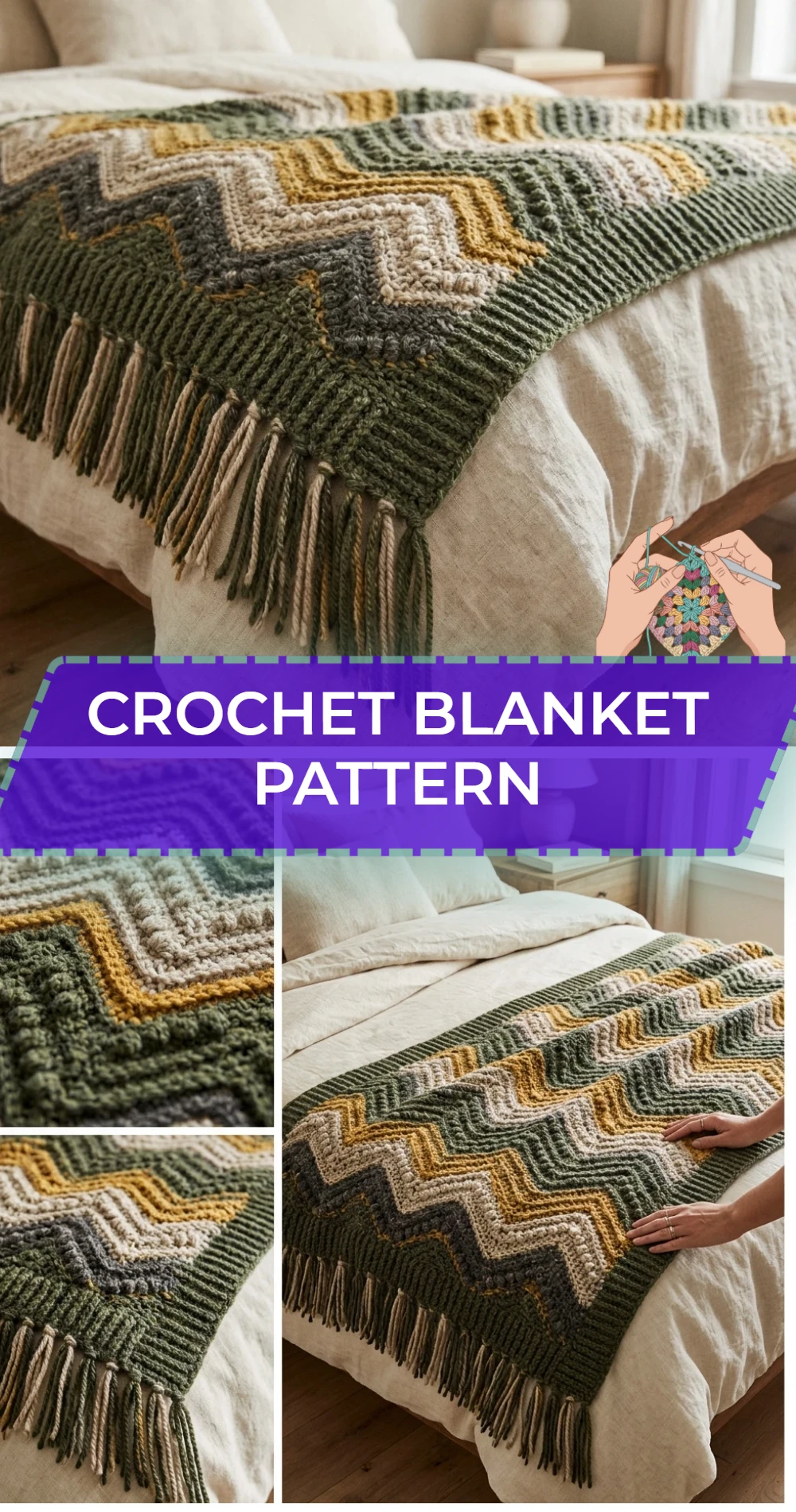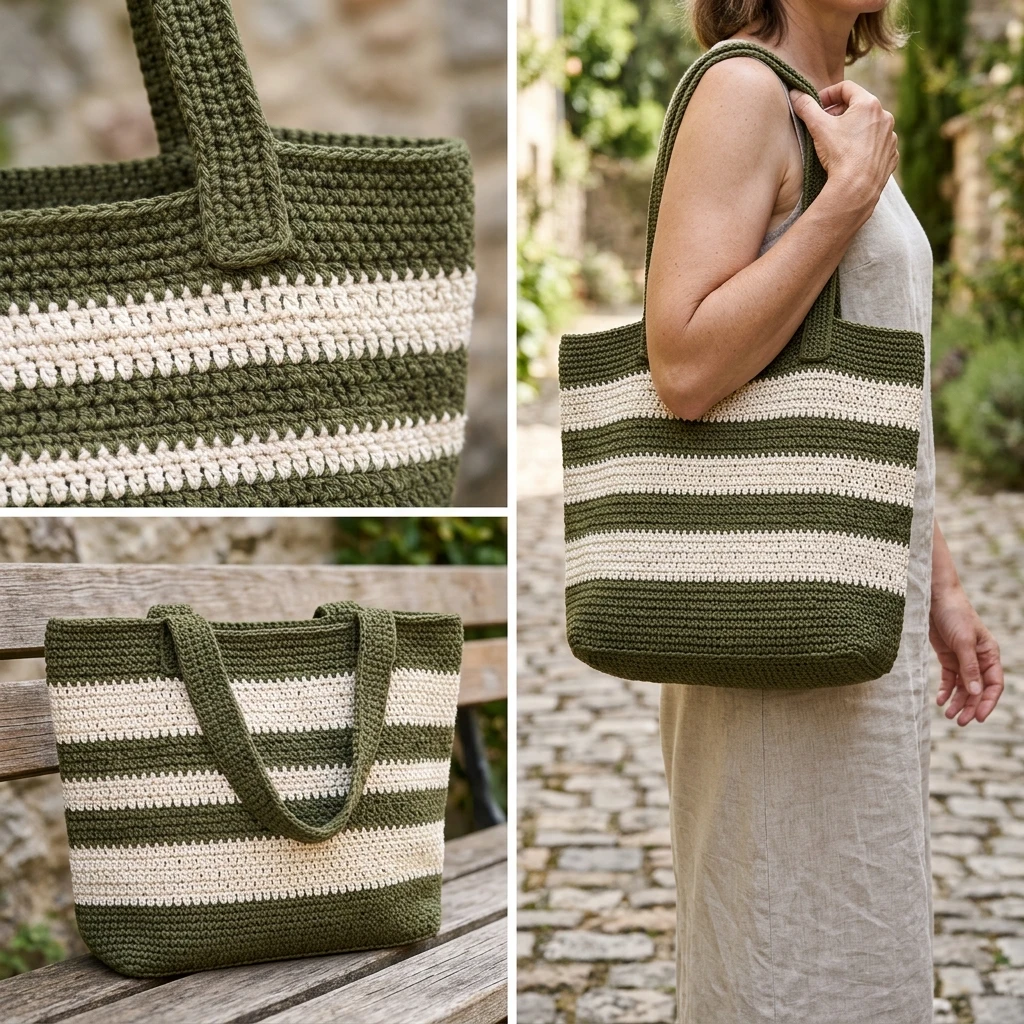
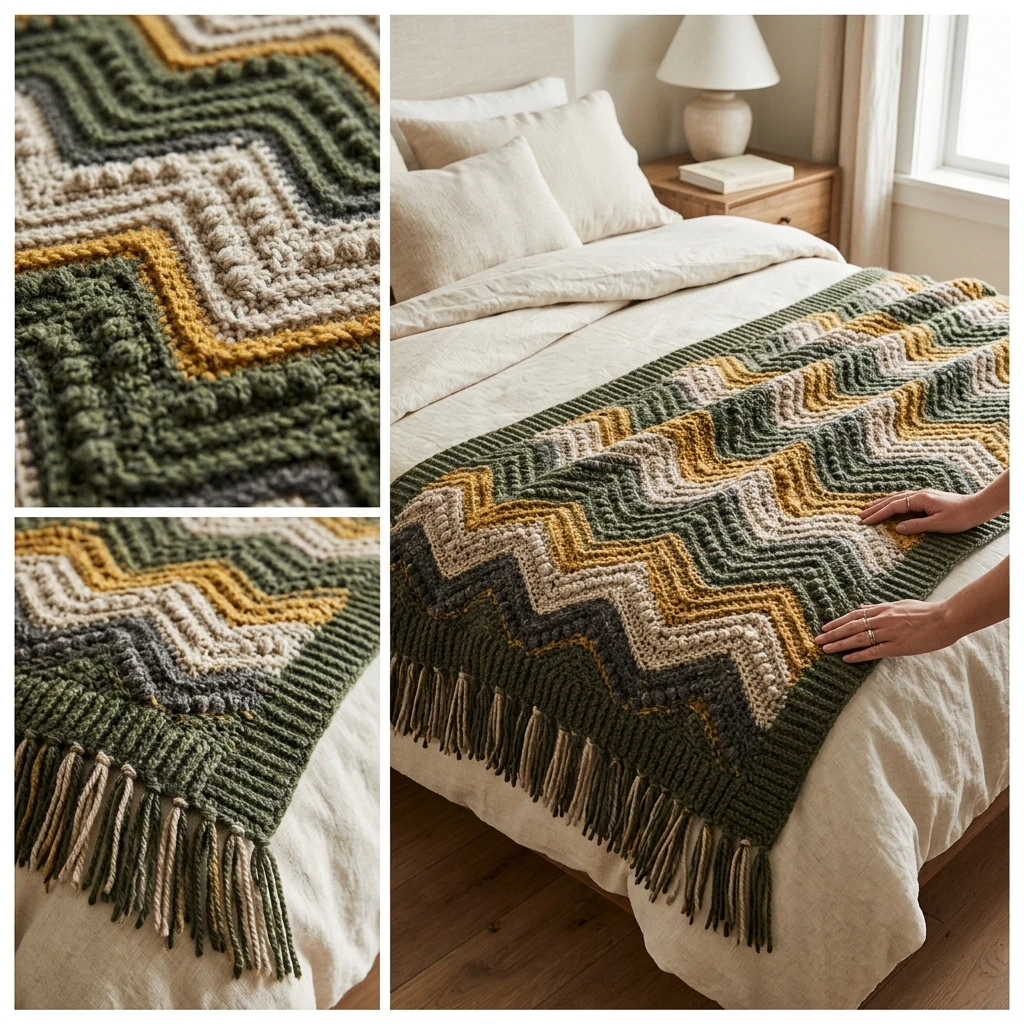
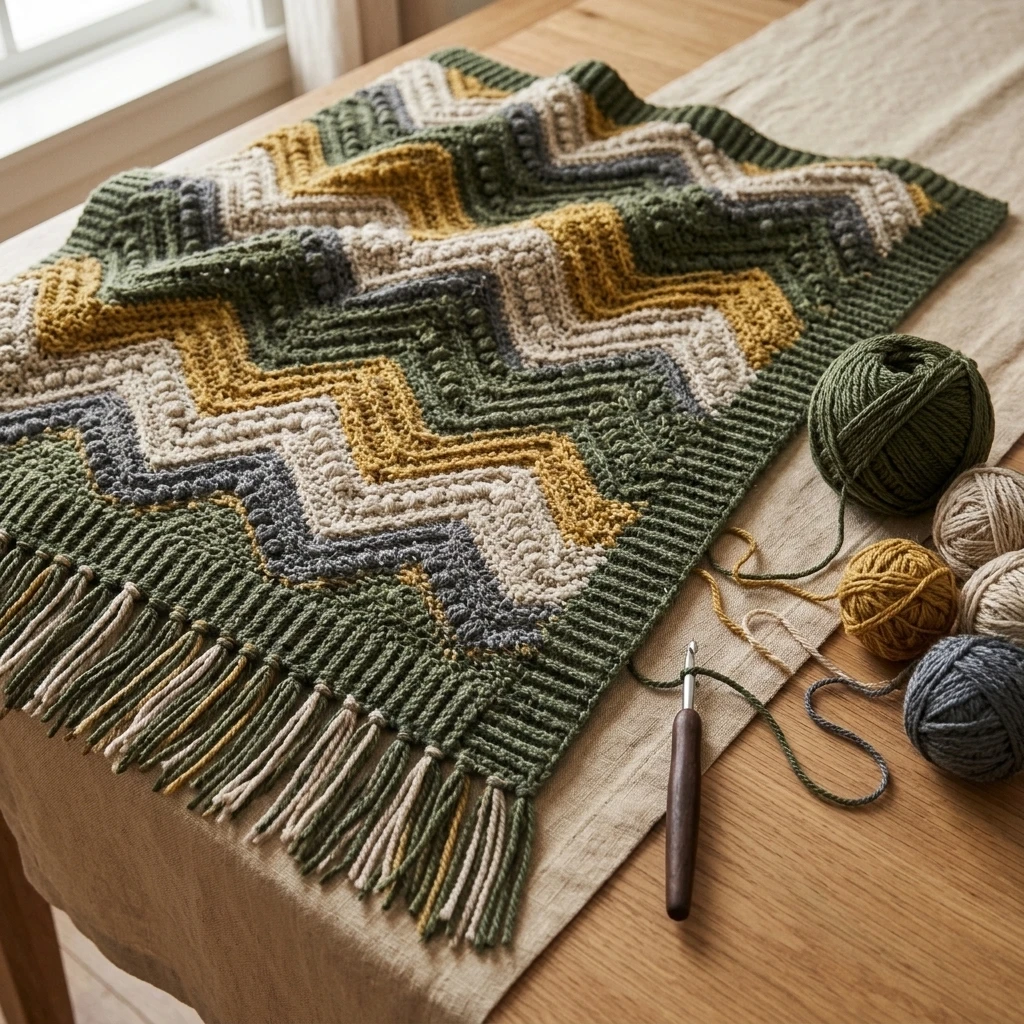
Imagine a piece that transforms any living space into a sanctuary of comfort—the Crochet Blanket Pattern. This project features a rhythmic, textured stitch that creates a dense yet flexible fabric, perfect for chilly evenings or as a sophisticated layer at the foot of a bed. Designed with a timeless aesthetic in mind, this blanket focuses on clean lines and a subtle geometric repeat that suits both modern minimalist and cozy farmhouse interiors. The construction is worked in rows, allowing for easy size adjustments and a meditative crafting experience that appeals to makers looking for a substantial, high-quality finished project.
The Design: What Makes This Pattern Different
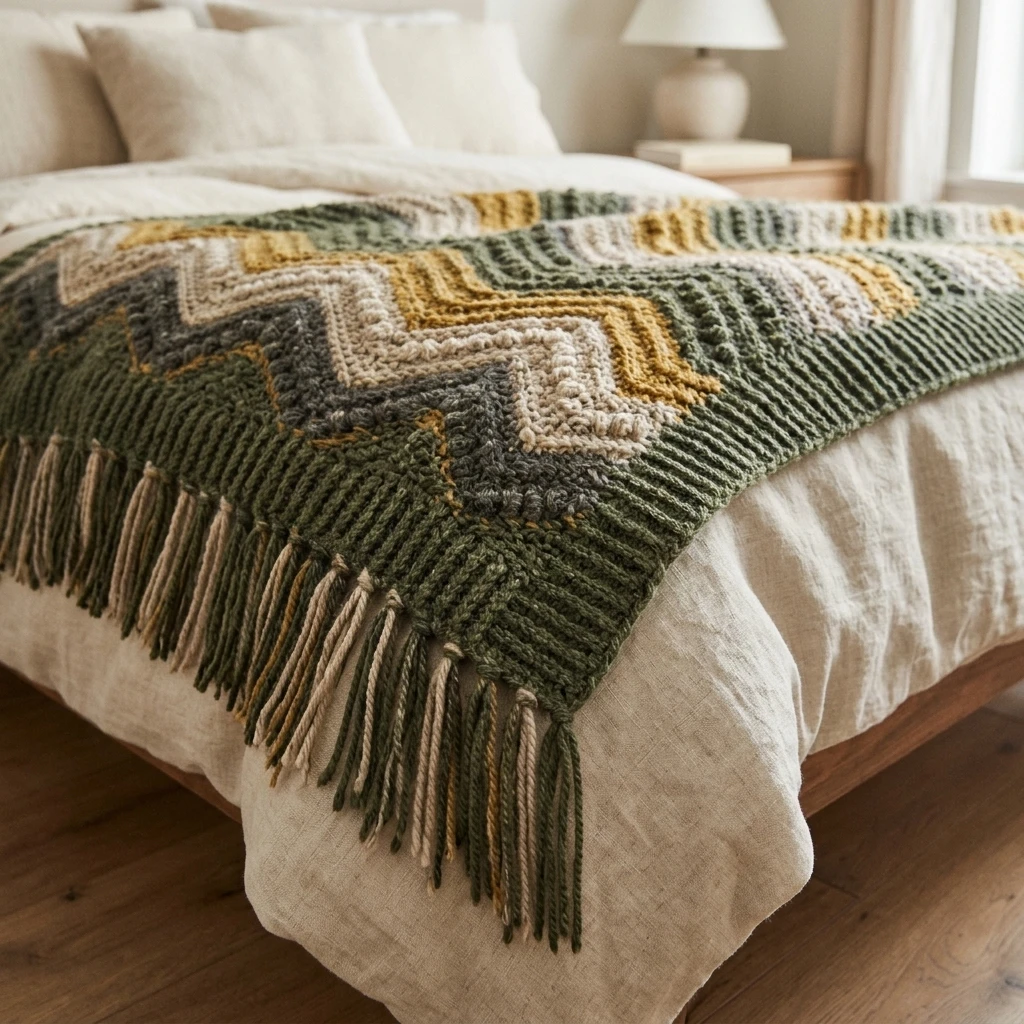
This design prioritizes structural integrity and drape. Unlike many standard blanket patterns that can become heavy or “holey,” this approach uses a combination of stitches that lock together, providing warmth without excessive weight. The visual identity is defined by its crisp edges and uniform surface texture, which highlights the natural sheen of high-quality yarns. One common mistake to avoid is neglecting the turning chain height; if your turning chains are too loose, the edges of the blanket will bow outward, creating an uneven silhouette that is difficult to fix during blocking.
Project Info at a Glance
| Skill Level | Advanced Beginner |
| Estimated Time | 25–35 Hours |
| Finished Size | Approx. 50″ x 60″ (Throw Size) |
| Hook Size | 6.0mm (J-10) |
| Yarn Weight | Worsted (Weight 4) |
| Gauge | 14 sts x 10 rows = 4″ in pattern stitch |
| Best For | Home Decor / Gift Sets |
Materials and Tools
Yarn
For a standard throw size, you will need approximately 2,200 to 2,400 yards of worsted weight yarn. An acrylic-wool blend is highly suggested for its durability and “bounce,” which helps the texture pop. If using multiple colors for stripes, ensure all yarns are from the same brand and weight class to maintain a consistent tension throughout the piece.
Tools
- 6.0mm (J-10) Crochet Hook (or size needed to obtain gauge)
- Large-eye tapestry needle for weaving in ends
- Measuring tape
- Sharp scissors
- Stitch markers (optional, but helpful for counting long foundation rows)
Abbreviations
- ch: chain
- st(s): stitch(es)
- sc: single crochet
- dc: double crochet
- sk: skip
- rep: repeat
- yo: yarn over
Pattern — Step by Step
Foundation and Setup
The blanket is worked flat in back-and-forth rows. The stitch count is based on an odd number of chains plus two for the turning chain. If you wish to customize the width, simply adjust your starting chain accordingly, keeping the math consistent for the textured repeat.
- Foundation Row: Ch 153. (Suggested width for 50″).
- Row 1: Sc in the 2nd ch from hook and in each ch across. Turn. (152 sts)
- Row 2: Ch 2 (counts as first dc). *Sk next st, dc in next st, dc in the skipped st (crossed dc created)*. Rep from * to * across until 1 st remains. Dc in the last st. Turn.
- Row 3: Ch 1. Sc in each st across, including the top of the turning ch-2. Turn.
- Row 4: Ch 2. Dc in each st across. Turn.
- Row 5: Ch 1. Sc in each st across. Turn.
Body and Growth
Continue repeating Rows 2 through 5 until the blanket reaches your desired length (photo-inspired length is 60″). Ensure you end on a Row 5 (sc row) to provide a clean edge for the border application. Always count your stitches every 5–10 rows to ensure you haven’t accidentally dropped a stitch at the beginning or end of a row.
Finishing the Border
To create a professional finish, work one round of sc around the entire perimeter. Work 3 sc into each corner stitch to prevent the corners from curling. Fasten off and weave in all yarn tails securely using your tapestry needle.
Assembly
Because this blanket is worked in one continuous piece, assembly is minimal and focuses on the final presentation and structural finishing of the edges.
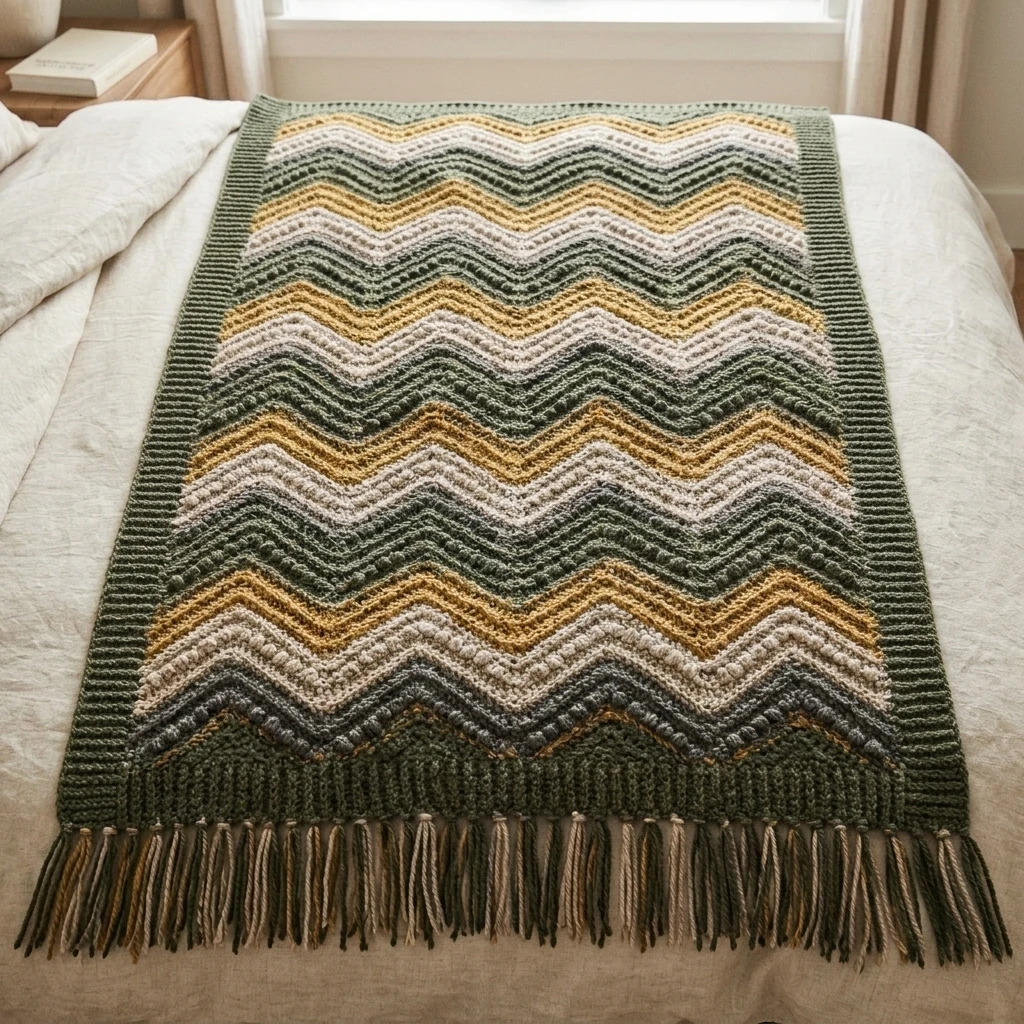
- Lay the finished blanket flat on a clean surface or blocking mats.
- Identify any loose yarn tails from color changes or new skeins.
- Use a tapestry needle to weave tails into the densest part of the stitches, traveling at least 2 inches in one direction and 1 inch back to lock the yarn.
- Trim excess yarn close to the fabric, being careful not to snip the blanket itself.
- Steam block lightly if using natural fibers to open up the stitch definition and even out the edges.
7 Technical Tips for a Better Crochet Blanket Pattern
- Maintain Consistent Tension: Large projects often span weeks. Check your gauge periodically to ensure your tension hasn’t loosened as you became more comfortable with the pattern.
- Count Your Foundation: Use stitch markers every 20 or 50 stitches on your foundation chain to avoid miscounting and having to restart the entire project.
- Seamless Color Changes: If changing colors, pull the new color through the last two loops of the final stitch of the previous row for a clean transition.
- Mind the Edges: If your edges look “wavy,” you may be adding an extra stitch at the start of the row. The ch-2 in this pattern usually counts as a stitch; skip the very first base stitch to compensate.
- Yarn Lot Consistency: Buy all your yarn at once. Even slight variations in dye lots can become visible in a large, flat expanse of a blanket.
- Choose the Right Fiber: For a heavy blanket, avoid 100% cotton as it can stretch out over time under its own weight; a blend offers better memory.
- Blocking is Key: Even a “perfect” blanket looks better after blocking. It settles the stitches into their final position and creates professional, straight edges.
Frequently Asked Questions
How many skeins of yarn do I need?
For a standard 50″ x 60″ throw using worsted weight yarn, you will typically need 10 to 12 skeins of 200-yard yarn. Always check the yardage on your specific label.
Can I use a different yarn weight?
Yes, but it will change the size and drape. If you use bulky yarn, increase your hook size to 8.0mm or 9.0mm and reduce your starting chain count.
Why is my blanket curling at the corners?
This usually happens if the foundation chain is too tight or if you didn’t add enough stitches in the corners during the border round. Try using a hook one size larger for the foundation chain only.
Is this pattern reversible?
While the texture is more pronounced on the “right side,” the crossed double crochets create an attractive, slightly different geometric look on the “wrong side,” making it effectively reversible.
How do I wash a handmade crochet blanket?
Always follow the yarn label instructions. Generally, it is best to machine wash on a delicate cycle inside a large mesh laundry bag and lay flat to dry to prevent stretching.
Conclusion
Creating a crochet blanket is a labor of love that results in a functional heirloom for your home. By focusing on consistent stitch work and careful finishing, you can produce a high-end piece that rivals boutique decor. This pattern offers the perfect balance of simplicity and sophisticated texture, making it a staple for any maker’s library. If you found this tutorial helpful, be sure to save this project to your Crochet Patterns board on Pinterest. What color palette are you planning to use for your next big blanket project?
Save This Crochet Pattern