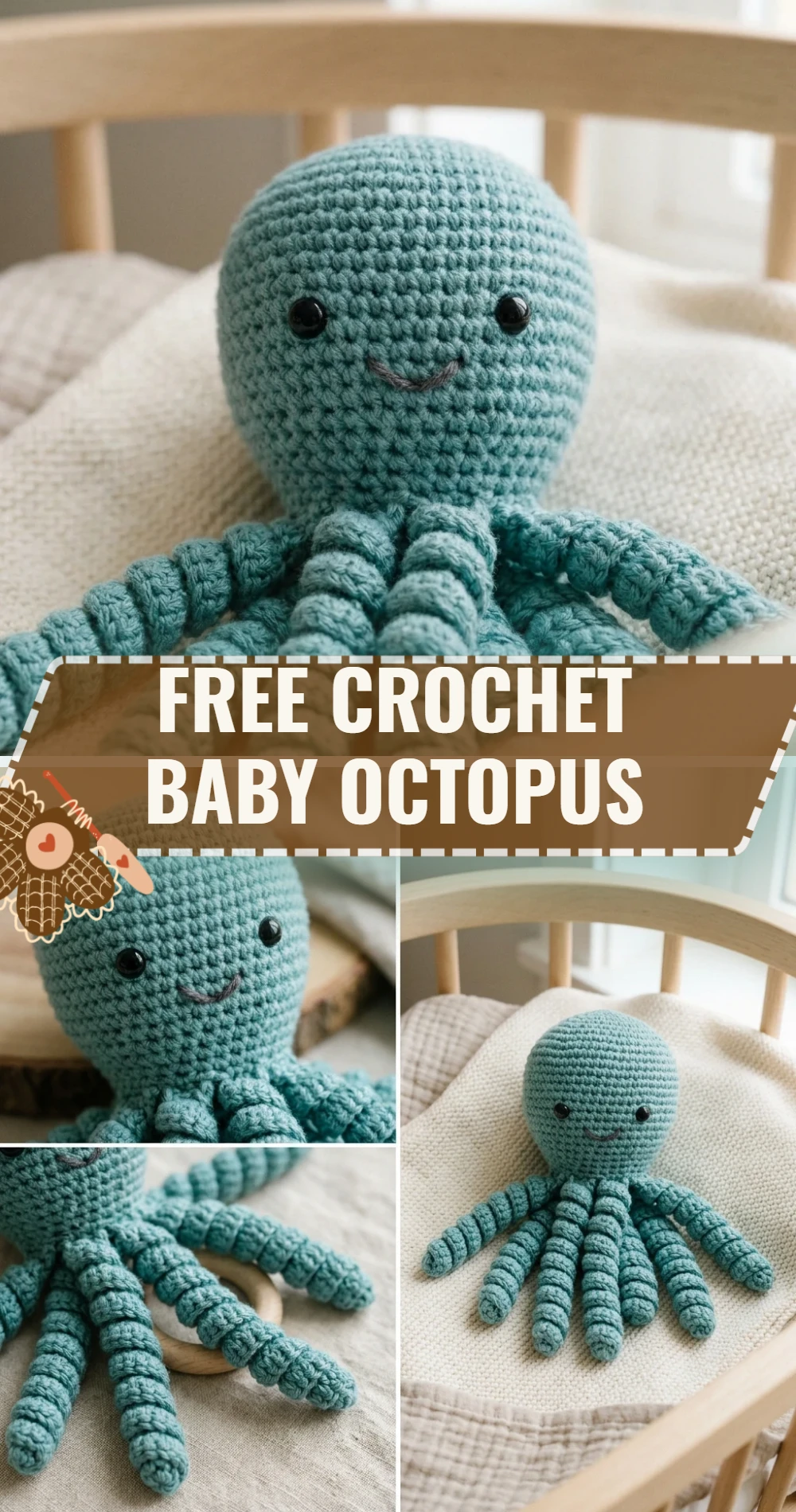
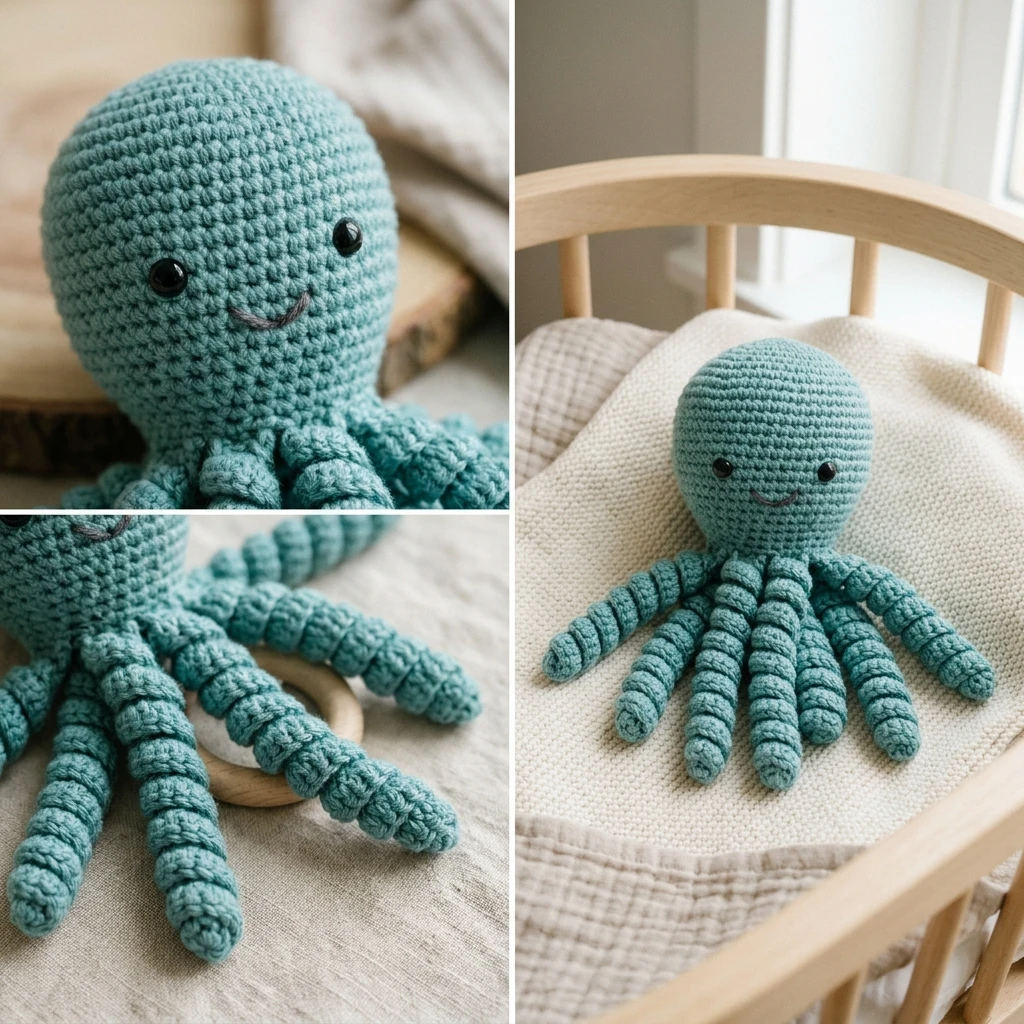
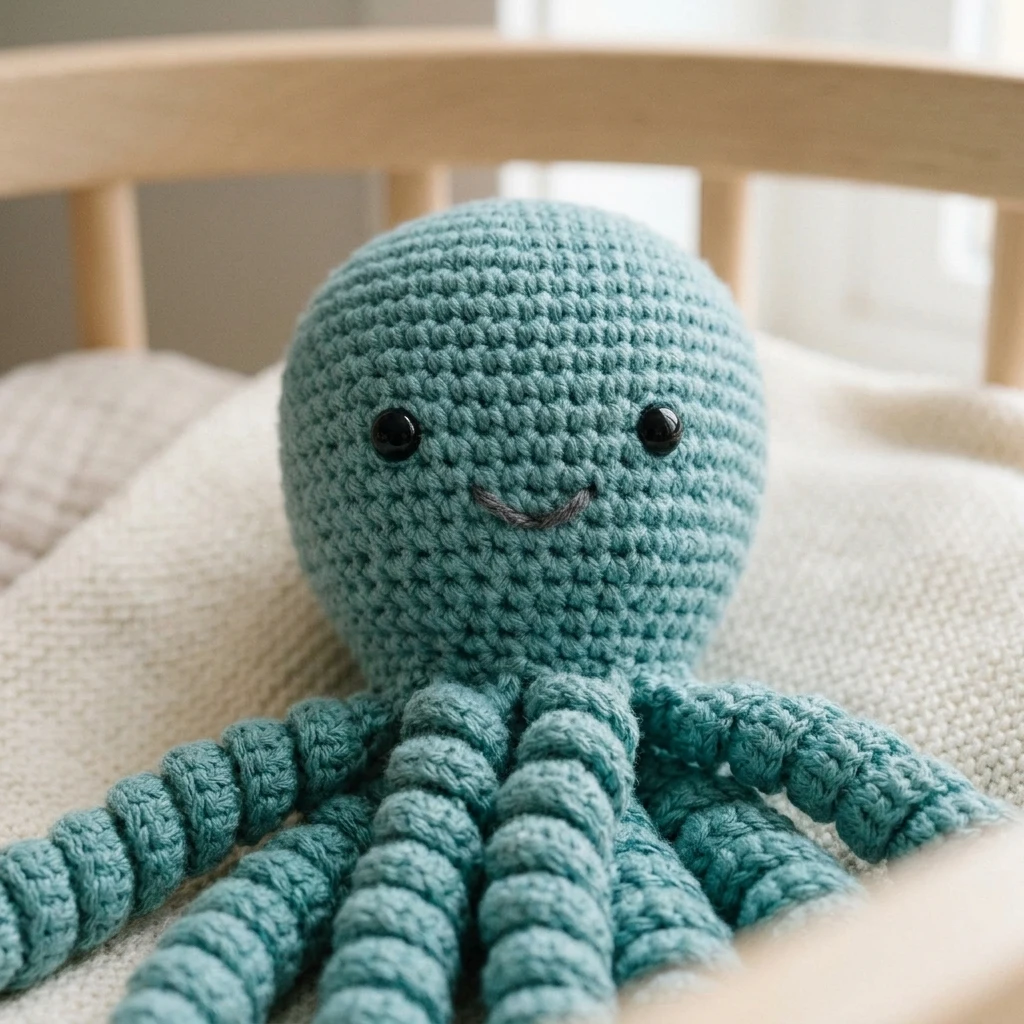
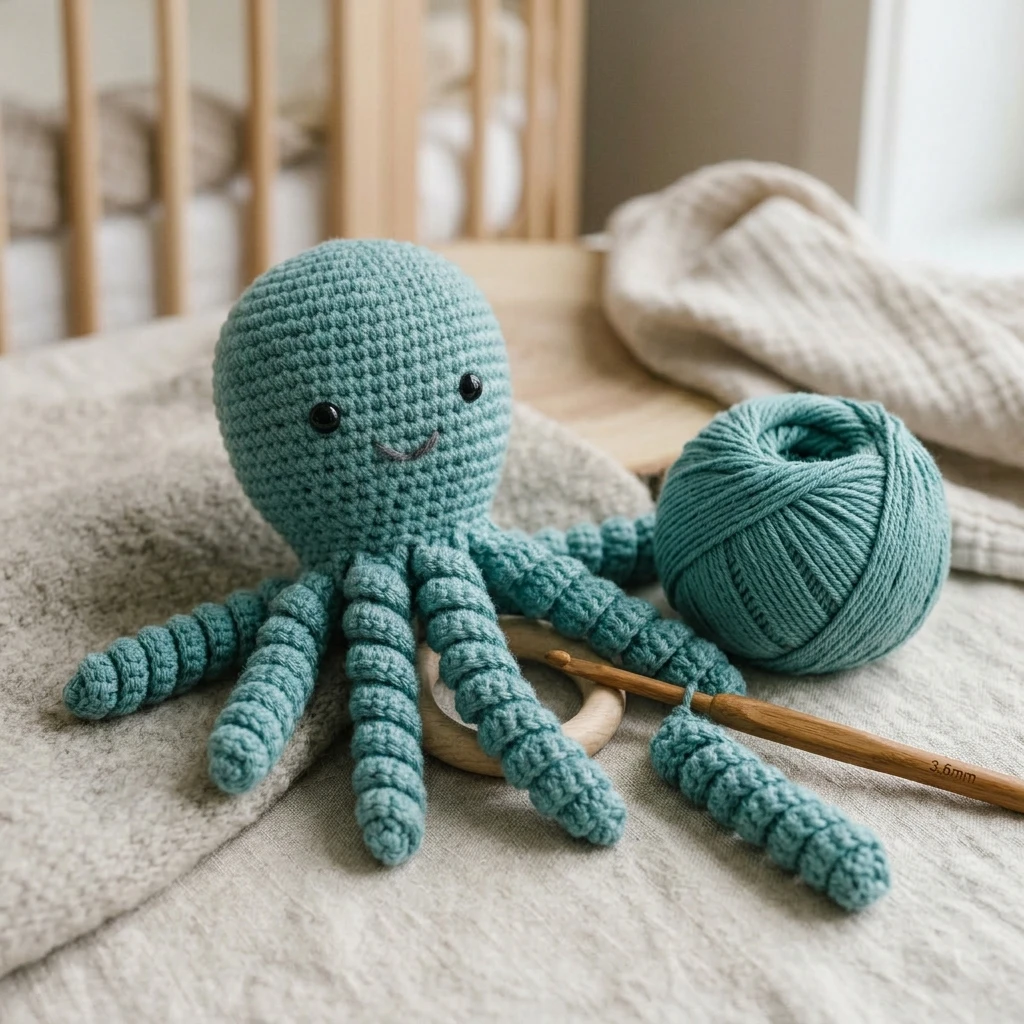
This adorable crochet baby octopus is more than just a toy; it is a soothing companion designed with the tiniest hands in mind. Featuring a soft, rounded head and bouncy, spring-like tentacles, this project is inspired by the therapeutic comfort these creatures provide to newborns and preemies, as the curled legs mimic the feel of an umbilical cord. The construction is straightforward amigurumi, worked in continuous spirals to ensure a sturdy, gap-free finish that stands up to plenty of cuddles. Whether you are crafting for a baby shower gift or a local hospital donation, this octopus is a quick, rewarding project that brings a touch of maritime magic to any nursery.
The Design: What Makes This Pattern Different
The design of this baby octopus focuses on safety and tactile stimulation. Unlike traditional stuffed toys that may have long, dangling limbs, these tentacles are crocheted using a specific increase ratio that creates a natural, tight curl. This ensures they remain bouncy and easy for a baby to grip without becoming a tangled mess. Structurally, the pattern utilizes a closed-base method, where a flat disc is crocheted separately and then joined to the body. This provides a much cleaner finish than simply cinching the bottom shut. A common mistake to avoid is using a hook that is too large for your yarn weight; doing so will create gaps in your stitches where the stuffing might peek through, which can be a safety hazard for infants.
Project Info at a Glance
| Feature | Details |
|---|---|
| Skill Level | Beginner / Easy |
| Estimated Time | 1 – 1.5 Hours |
| Finished Size | Approximately 6-7 inches (with tentacles extended) |
| Hook Size | 3.5mm (E) or 3.25mm (D) |
| Yarn Weight | Lightweight Cotton or Cotton Blend (Category 3 or 4) |
| Gauge | Photo-inspired: 5 sc x 5 rows = 1 inch (not critical, but must be tight) |
| Best For | Baby Showers, Hospital Donations, Sensory Play |
Materials and Tools
Yarn
For this project, cotton yarn is highly recommended due to its breathability, durability, and lack of fuzz/halo. You will need approximately 60 to 80 yards of a DK or Worsted weight cotton yarn. Solid colors work best to showcase the stitch definition, though variegated yarns can create a fun, coral-reef effect.
Tools
You will need a crochet hook slightly smaller than what the yarn label suggests to ensure a tight tension. Additionally, gather a tapestry needle for weaving in ends, a stitch marker to track your continuous rounds, and a small amount of hypoallergenic polyester fiberfill. If the toy is intended for a newborn, it is best to embroider the eyes rather than using plastic safety eyes.
Abbreviations
- ch: chain
- sc: single crochet
- inc: increase (2 sc in the same stitch)
- dec: invisible decrease (sc 2 together using front loops only)
- st(s): stitch(es)
- sl st: slip stitch
- ( ): repeat instructions inside parentheses
Pattern — Step by Step
The Octopus Head
The head is worked from the top down in a continuous spiral. Do not join rounds with a slip stitch unless specified.
- Round 1: Create a magic ring and work 6 sc into the ring. (6)
- Round 2: Work 2 sc in each st around. (12)
- Round 3: (1 sc, inc) repeat 6 times. (18)
- Round 4: (2 sc, inc) repeat 6 times. (24)
- Round 5: (3 sc, inc) repeat 6 times. (30)
- Round 6-11: Work 1 sc in each st around. (30)
- Round 12: (3 sc, dec) repeat 6 times. (24)
- Round 13: (2 sc, dec) repeat 6 times. (18)
- Round 14: (1 sc, dec) repeat 6 times. (12)
- Fasten off, leaving a long tail for sewing. Stuff the head firmly.
The Tentacles and Base
The tentacles are worked onto a flat base disc which is then attached to the bottom of the head.
- Round 1: Magic ring, 6 sc into ring. (6)
- Round 2: 2 sc in each st around. (12)
- Round 3: To create the first tentacle: *Ch 40. Work 3 sc in the 2nd ch from hook and in each remaining ch across. Sl st into the next sc of the base disc.*
- Repeat from * to * until you have 8 tentacles total. You will have some stitches left on the disc; simply sl st across them to finish.
Assembly
Bringing your octopus to life requires a bit of simple sewing to ensure the base is secure and the facial features are symmetrical. Before closing the bottom, make sure your stuffing is distributed evenly to create a smooth, bulbous shape.
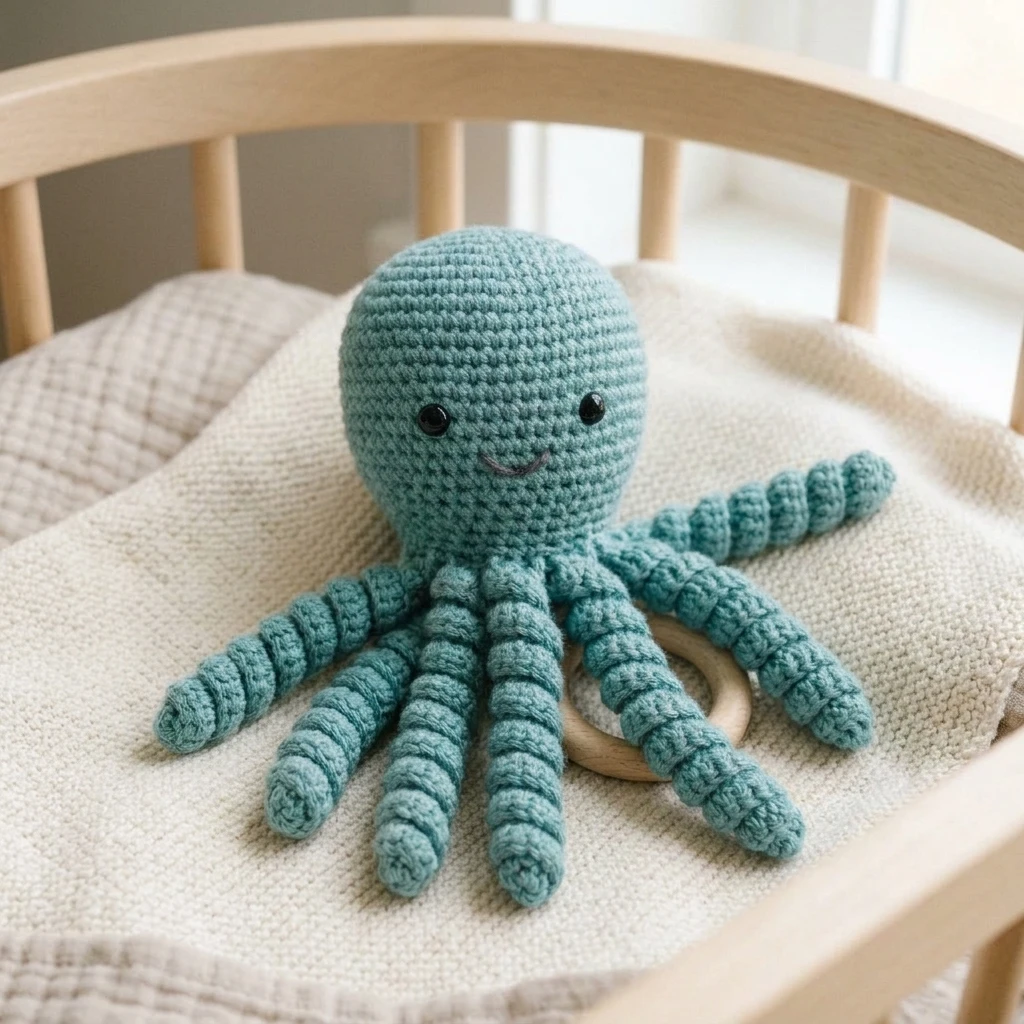
- If you are using safety eyes, insert them between rounds 8 and 9, roughly 5 stitches apart, before the head is fully closed. Otherwise, embroider the eyes and a small mouth now.
- Align the base disc with the bottom opening of the head (Round 14).
- Using the long yarn tail from the head and your tapestry needle, whipstitch the 12 stitches of the base disc to the 12 stitches of the head opening.
- Secure the thread with a knot and weave the tail into the center of the body to hide it.
- Gently pull on each tentacle to help the curls “set” into their spiral shape.
7 Technical Tips for a Better Free Crochet Baby Octopus
- Use the Invisible Decrease: When shaping the bottom of the head, use the invisible decrease method (inserting the hook into the front loops only of the next two stitches) to prevent unsightly bumps.
- Check Tension Consistency: Ensure your tension remains tight throughout the tentacles; if the tension is too loose, the legs will sag rather than curl.
- Cotton is King: For any baby item, mercerized cotton is best because it can be machine-washed at high temperatures, which is essential for hygiene.
- Tentacle Length Safety: If donating to a hospital, ensure the extended tentacles do not exceed 8 inches (20cm) to meet safety standards.
- Embroider for Safety: For infants, embroidered eyes using black yarn are much safer than plastic safety eyes, which can potentially become a choking hazard.
- Firm Stuffing: Stuff the head more than you think you need to. Over time, the fiberfill will compress, and you don’t want a floppy octopus.
- Spiral Marking: Always use a stitch marker at the beginning of each round. It is very easy to lose your place in amigurumi, and one wrong count can lopsided the entire head.
Frequently Asked Questions
What is the best yarn for a baby octopus?
A high-quality 100% cotton yarn is preferred. It is soft, doesn’t shed fibers that a baby could inhale, and holds its shape well even after multiple washes.
Why aren’t my tentacles curling?
Tentacles curl because you are working multiple stitches (usually 2 or 3) into every single chain. If they are straight, check to ensure you haven’t missed any increases along the chain length.
Can I make this octopus larger?
Yes. To scale up, simply continue the increase rounds of the head (e.g., 4 sc, inc; 5 sc, inc) and use a heavier weight yarn with a corresponding larger hook.
Is this pattern safe for preemies?
Generally, yes, but always check with the specific hospital’s guidelines. Many require specific yarn types (cotton), no safety eyes, and strict limits on tentacle length.
How do I clean the crochet octopus?
If made with cotton, you can place the octopus in a mesh laundry bag and wash on a gentle cycle with cold or warm water, then air dry completely.
Conclusion
Creating this free crochet baby octopus is a wonderful way to practice your amigurumi skills while making something truly meaningful. By following these steps, you’ve crafted a tactile, safe, and charming toy that provides comfort and joy. Don’t forget to experiment with different colors to create a whole school of sea friends! If you enjoyed this tutorial, pin it to your crochet board on Pinterest so you can find it for your next baby gift. What color yarn will you choose for your first octopus?
Save This Crochet Pattern