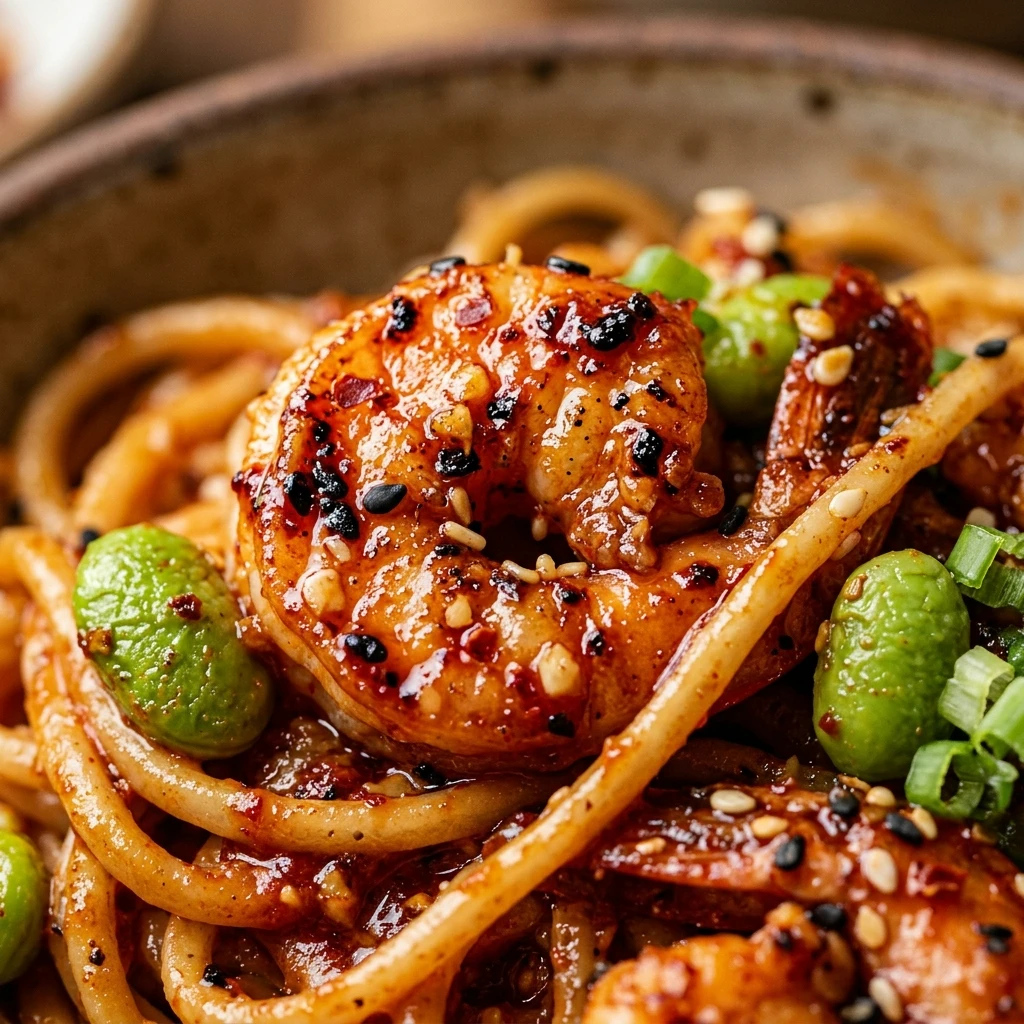
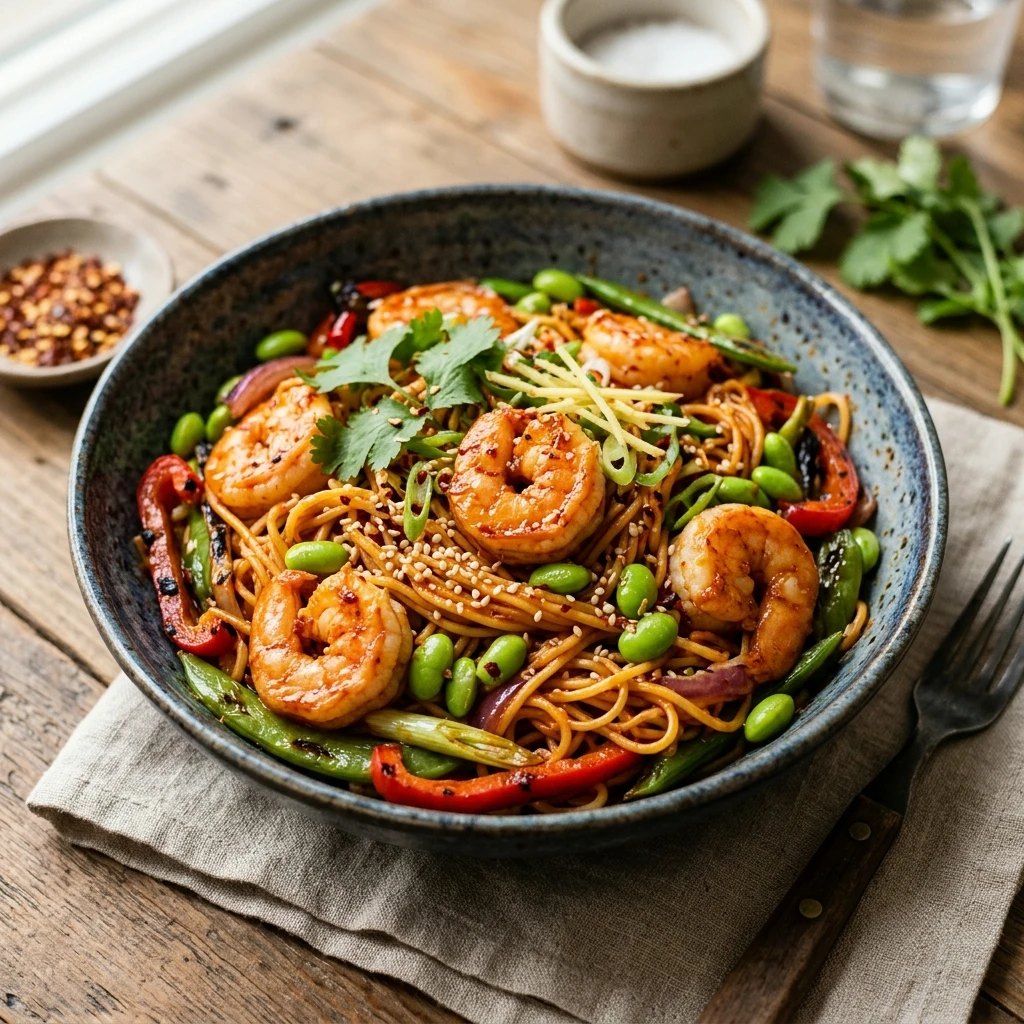
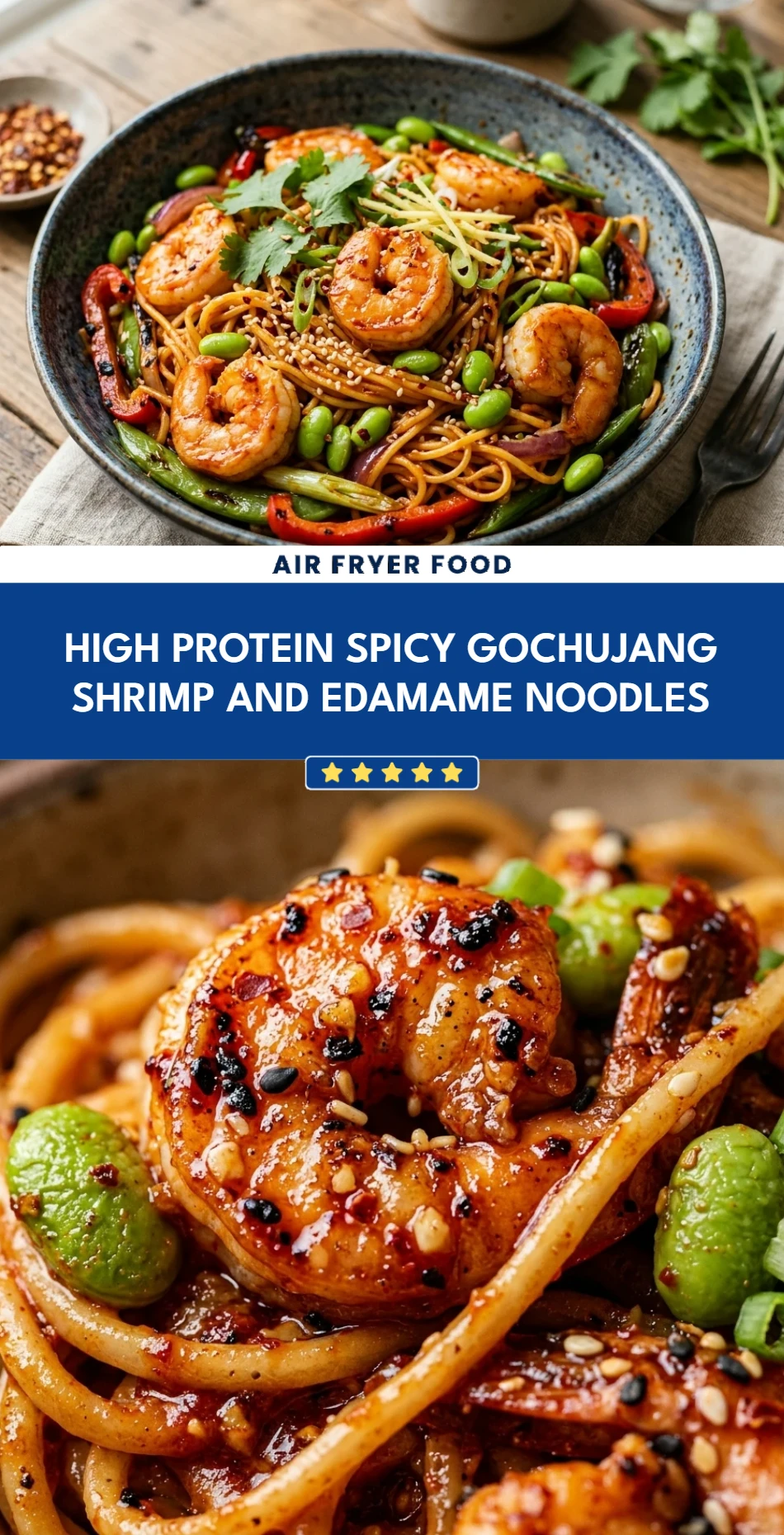
If you are craving a bold, restaurant-quality meal that fits perfectly into your fitness goals, these High Protein Spicy Gochujang Shrimp and Edamame Noodles are the answer. This dish combines the fiery, fermented depth of Korean chili paste with succulent shrimp and nutrient-dense edamame pasta. Unlike traditional wheat-based noodles, edamame noodles pack a massive protein punch and keep the carb count lower, making this a dream for anyone watching their macros. Best of all, you can whip this entire meal up in less than 30 minutes, ensuring you spend less time in the kitchen and more time enjoying your night.
Recipe Information
- Prep Time: 15 minutes
- Cook Time: 10 minutes
- Total Time: 25 minutes
- Servings: 2 servings
- Difficulty: Easy
Nutrition values
- Calories: 440 kcal
- Protein: 46g
- Carbs: 32g
Why Make This High Protein Spicy Gochujang Shrimp and Edamame Noodles
This recipe is a powerhouse of flavor and nutrition. By swapping standard pasta for edamame noodles, you significantly increase the fiber and protein content without sacrificing the satisfying “slurp” factor. The Gochujang sauce provides a complex balance of sweet, savory, and spicy notes that coat every strand of noodle. It is an excellent choice for meal prep because the flavors actually deepen the next day. If you want a meal that feels indulgent but supports a lean lifestyle, this dish hits every requirement.
Ingredients
- 8 oz Edamame noodles (dry weight)
- 1 lb Large shrimp, peeled and deveined
- 2 tbsp Gochujang (Korean chili paste)
- 1 tbsp Low-sodium soy sauce
- 1 tsp Toasted sesame oil
- 1 tbsp Honey or maple syrup
- 3 cloves Garlic, minced
- 1 tsp Fresh ginger, grated
- 1/2 cup Reserved pasta water
- 2 Green onions, sliced
- 1 tsp Sesame seeds
- 1 tbsp Avocado oil for sautéing
Directions
Step 1: Prepare the Noodles and Sauce
Bring a large pot of salted water to a boil. Add the edamame noodles and cook according to the package instructions, usually about 4 to 5 minutes. Before draining, carefully scoop out half a cup of the starchy pasta water and set it aside. Drain the noodles and rinse them quickly under warm water to prevent sticking. In a small bowl, whisk together the Gochujang, soy sauce, sesame oil, and honey until the mixture forms a smooth paste.
Step 2: Sauté the Aromatics and Shrimp
Heat the avocado oil in a large skillet or wok over medium-high heat. Pat the shrimp dry with a paper towel to ensure they sear properly. Add the shrimp to the pan in a single layer and cook for about 2 minutes per side until they turn pink and opaque. Add the minced garlic and grated ginger to the pan during the last minute of cooking. Stir constantly to prevent the garlic from burning, as this ensures a fragrant base for your sauce.
Step 3: Combine and Toss
Reduce the heat to medium and pour the prepared Gochujang sauce over the shrimp. Add the cooked edamame noodles and the reserved pasta water to the skillet. Use tongs to toss everything together vigorously. The pasta water will emulsify with the Gochujang to create a glossy sauce that clings to the noodles. Continue tossing for 1 to 2 minutes until the sauce thickens and coats every ingredient. Remove from heat and garnish with sliced green onions and sesame seeds.
Expert Tips for Perfect High Protein Spicy Gochujang Shrimp and Edamame Noodles
- Do not overcook the shrimp: Shrimp cook very quickly. Remove them from the heat the moment they turn opaque to avoid a rubbery texture.
- Save that pasta water: Edamame noodles are thirstier than wheat noodles. The starchy water is essential for creating a smooth, silky sauce that doesn’t dry out.
- Balance the heat: Gochujang brands vary in spiciness. Start with one tablespoon if you are sensitive to heat and taste the sauce before adding more.
- Pat the shrimp dry: Removing excess moisture from the shrimp ensures you get a nice golden sear rather than steaming them in the pan.
Delicious Variations
- Vegetarian Option: Replace the shrimp with crispy pan-fried tofu or tempeh for a plant-based protein boost.
- Extra Veggies: Stir in some baby bok choy, shredded carrots, or bell peppers during the sauté step for added volume and micronutrients.
- Creamy Version: Add a tablespoon of Greek yogurt or light coconut milk to the sauce for a creamy, mild Gochujang experience.
- Gluten-Free: Ensure your Gochujang brand is certified gluten-free, and use tamari instead of soy sauce.
Frequently Asked Questions
What does Gochujang taste like?
Gochujang is a thick, fermented Korean chili paste. It has a unique flavor profile that is simultaneously spicy, slightly sweet, and deeply savory (umami). It provides a much more complex heat than standard hot sauce.
Can I use regular pasta instead of edamame noodles?
Yes, you can use spaghetti, linguine, or rice noodles. However, keep in mind that edamame noodles are what provide the high protein and fiber content for this specific recipe version.
Is this recipe suitable for meal prep?
Absolutely. You can store these noodles in an airtight container in the refrigerator for up to 3 days. When reheating, add a splash of water or broth to loosen the sauce back up.
How can I make this less spicy?
To reduce the heat, cut the Gochujang amount in half and increase the honey or maple syrup slightly. You can also add a squeeze of lime juice at the end to brighten the dish and cut through the spice.
Where can I find edamame noodles?
Most health food stores and major grocery chains carry edamame noodles in the pasta aisle or the international food section. They are usually sold in dry form, similar to traditional spaghetti.
Conclusion
This High Protein Spicy Gochujang Shrimp and Edamame Noodles recipe proves that healthy eating never has to be boring. With its vibrant colors and explosive flavors, it satisfies your cravings for takeout while fueling your body with high-quality protein. Whether you are cooking for a quick weeknight dinner or prepping your lunches for the week, this dish is sure to become a staple in your rotation. Grab your wok and start cooking this spicy, savory masterpiece tonight!
High Protein Spicy Gochujang Shrimp and Edamame Noodles
- Total Time: 25 minutes
- Diet: High Protein, Low-Carb
Ingredients
- 8 oz Edamame noodles (dry weight)
- 1 lb Large shrimp, peeled and deveined
- 2 tbsp Gochujang (Korean chili paste)
- 1 tbsp Low-sodium soy sauce
- 1 tsp Toasted sesame oil
- 1 tbsp Honey or maple syrup
- 3 cloves Garlic, minced
- 1 tsp Fresh ginger, grated
- 1/2 cup Reserved pasta water
- 2 Green onions, sliced
- 1 tsp Sesame seeds
- 1 tbsp Avocado oil for sautéing
Instructions
- Bring a large pot of salted water to a boil. Add the edamame noodles and cook according to the package instructions, usually about 4 to 5 minutes. Before draining, carefully scoop out half a cup of the starchy pasta water and set it aside. Drain the noodles and rinse them quickly under warm water to prevent sticking. In a small bowl, whisk together the Gochujang, soy sauce, sesame oil, and honey until the mixture forms a smooth paste.
- Heat the avocado oil in a large skillet or wok over medium-high heat. Pat the shrimp dry with a paper towel to ensure they sear properly. Add the shrimp to the pan in a single layer and cook for about 2 minutes per side until they turn pink and opaque. Add the minced garlic and grated ginger to the pan during the last minute of cooking. Stir constantly to prevent the garlic from burning, as this ensures a fragrant base for your sauce.
- Reduce the heat to medium and pour the prepared Gochujang sauce over the shrimp. Add the cooked edamame noodles and the reserved pasta water to the skillet. Use tongs to toss everything together vigorously. The pasta water will emulsify with the Gochujang to create a glossy sauce that clings to the noodles. Continue tossing for 1 to 2 minutes until the sauce thickens and coats every ingredient. Remove from heat and garnish with sliced green onions and sesame seeds.
- Cook Time: 25 minutes